
Water is one of the most important resources on Earth. Every living thing depends on clean water to survive. Humans need water for drinking, farming, cooking, cleaning, and industry. Animals and plants also need water to grow and live. Sadly, water pollution has become a serious global problem. Rivers, lakes, oceans, and even underground water sources are being polluted every day.
Water pollution happens when harmful substances enter water bodies and make the water unsafe. These substances can come from factories, farms, cities, and homes. Common pollutants include chemicals, waste, oil, plastics, and harmful bacteria. Because of this growing problem, water pollution treatment has become very important.
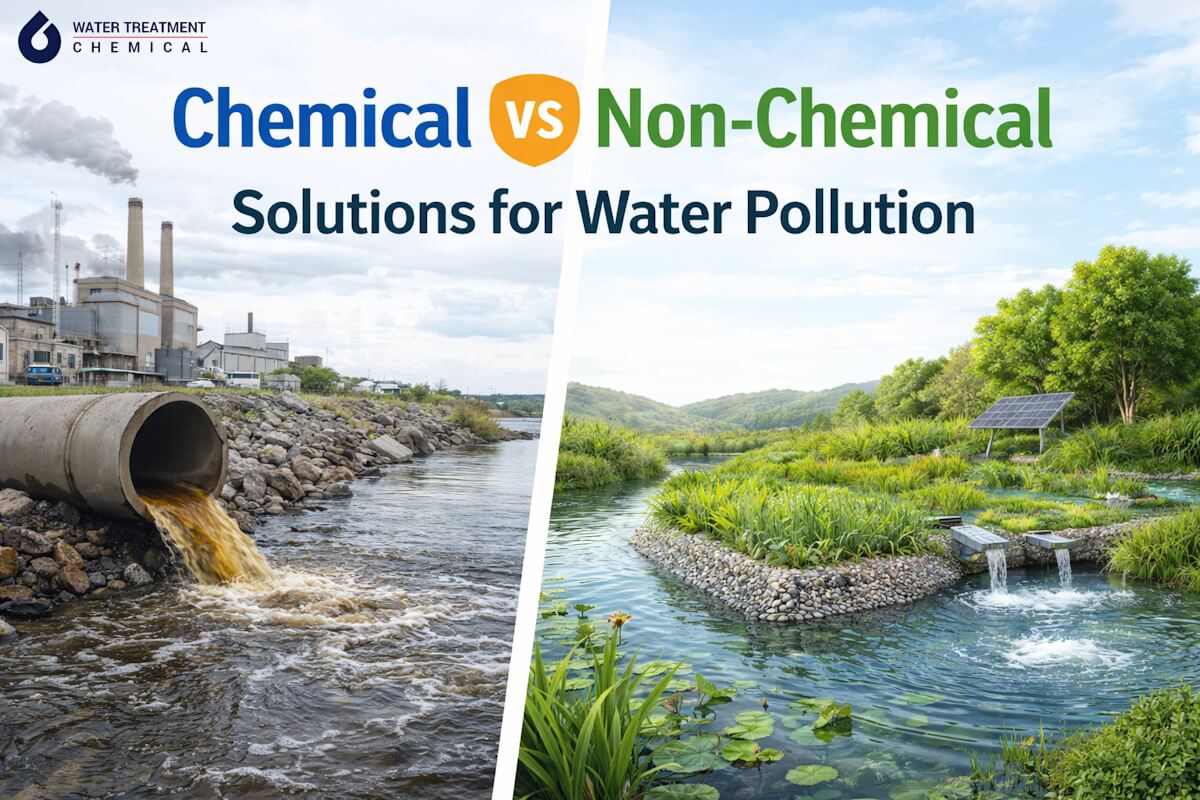
There are two main ways to treat polluted water. One method uses chemicals, and the other relies on non chemical solutions. Both methods aim to clean water and make it safe again, but they work in different ways. Each approach has its own benefits and limits.
This article explains chemical and non chemical solutions for water pollution. It compares how they work, their impact on health and the environment, their cost, and their long term value. By the end, you will have a clear idea of which method is better and why.
Looking for better water pollution treatment options?
Understanding Water Pollution
Before comparing solutions, it is important to understand what water pollution really is.
Water pollution happens when harmful materials enter water sources. These materials can be solid, liquid, or gas. Once inside the water, they change its quality. Polluted water can look dirty, smell bad, or taste strange. Sometimes pollution is not visible, but it is still dangerous.
Common causes of water pollution include:
- Industrial waste released into rivers
- Farm runoff containing fertilizers and pesticides
- Sewage and wastewater from cities
- Plastic waste and garbage
- Oil spills
- Chemical leaks
Water pollution affects both people and nature. Drinking polluted water can cause serious diseases. Polluted water can kill fish and plants. It can also harm soil and crops when used for farming.
Because of these dangers, proper water pollution treatment is necessary.
What Are Chemical Solutions for Water Pollution?
Chemical solutions for water pollution use chemicals to clean and treat water. These chemicals react with pollutants to remove or neutralize them. Chemical treatment has been used for many years and is common in many water treatment plants.
Common Chemical Methods Used in Water Treatment
Some widely used chemical methods include:
1. Coagulation and Flocculation
In this method, chemicals are added to water to make tiny particles stick together. These larger particles can then be removed easily.
2. Chlorination
Chlorine is added to water to kill bacteria and germs. This method is often used in drinking water treatment.
3. Chemical Precipitation
Chemicals are used to turn dissolved pollutants into solid particles. These solids can then be filtered out.
4. Oxidation
Strong chemicals are added to break down harmful substances in water.
Many industries depend on chemical treatment, and a water treatment chemical supplier plays an important role in providing these chemicals.
Advantages of Chemical Solutions
Chemical water treatment offers several benefits:
1. Fast Results
Chemical treatments work quickly. Pollutants can be removed in a short time, which is useful in emergencies.
2. Effective Against Many Pollutants
Chemicals can remove heavy metals, harmful bacteria, and toxic substances effectively.
3. Widely Available
Chemical treatment systems are common and easy to find. Many water treatment chemical suppliers offer a wide range of products.
4. Proven Technology
Chemical methods have been used for decades. Many treatment plants trust these systems because they are well known.
Limitations of Chemical Solutions
Despite their benefits, chemical solutions have some serious drawbacks.
1. Harmful Side Effects
Some chemicals can leave harmful residues in water. These residues may affect human health.
2. Environmental Damage
Chemical discharge can harm aquatic life. Over time, chemicals can damage ecosystems.
3. High Operating Costs
Chemicals must be bought regularly. This increases long term costs.
4. Dependence on Suppliers
Treatment plants rely on a water treatment chemical supplier. Supply issues or price increases can create problems.
5. Risk of Overuse
Using too many chemicals can create new pollution problems instead of solving old ones.
What Are Non Chemical Solutions for Water Pollution?
Non chemical solutions use natural or physical methods to clean water. These methods do not rely on harmful chemicals. Instead, they use biological processes, physical filters, or natural systems.
Non chemical solutions are gaining attention because they are safer and more sustainable.
Common Non Chemical Solutions for Water Pollution
Filtration
Water passes through sand, gravel, or special membranes to remove dirt and particles.
1. Biological Treatment
Microorganisms are used to break down organic waste naturally.
2. Constructed Wetlands
Artificial wetlands use plants and soil to clean polluted water.
3. Aeration
Air is added to water to support natural bacteria that break down pollutants.
4. Activated Carbon
Carbon filters absorb harmful substances without chemical reactions.
Advantages of Non Chemical Solutions
Non chemical solutions offer many important benefits.
1. Safe for Human Health
These methods do not add harmful chemicals to water. The risk of side effects is very low.
2. Environment Friendly
Non chemical solutions protect aquatic life and natural ecosystems.
3. Sustainable in the Long Term
Natural systems can work for many years with proper care.
4. Lower Chemical Dependency
There is no need to depend on a water treatment chemical supplier.
5. Better Public Acceptance
People trust natural methods more, especially for drinking water.
Unsure whether chemical or non chemical solutions are right for you?
Challenges of Non Chemical Solutions
Even though non chemical solutions have many benefits, they also face some challenges.
1. Slower Process
Natural methods may take more time to clean water.
2. Space Requirements
Some systems like wetlands need large areas of land.
3. Maintenance Needs
Biological systems must be monitored regularly.
4. Limited Effect on Certain Pollutants
Some toxic chemicals may be hard to remove without chemical help.
Comparing Chemical and Non Chemical Solutions
| Factor | Chemical Solutions | Non Chemical Solutions |
|---|---|---|
| Effectiveness | Work fast and remove many pollutants quickly | Effective but usually take more time |
| Safety | Can create health and environmental risks | Safer for humans and nature |
| Cost | Need constant spending on chemicals | May cost more at the start but cheaper over time |
| Sustainability | Depend on continuous chemical use | More sustainable and eco friendly |
| Long Term Impact | May cause secondary pollution | Support long term water health |
Role of Water Pollution Treatment in Modern Society
Water pollution treatment is not only about cleaning water today. It is about protecting future generations. As populations grow and industries expand, clean water demand increases.
Modern treatment systems often combine both chemical and non chemical solutions. This balanced approach helps achieve better results while reducing harm.
However, many experts believe the future lies in non chemical solutions because they align better with environmental protection goals.
Why Non Chemical Solutions Are Gaining Popularity
There are several reasons why non chemical solutions are becoming more popular.
1. Rising Environmental Awareness
People are more aware of pollution and climate change.
2. Stricter Regulations
Governments are limiting chemical discharge into water bodies.
3. Advances in Technology
New filtration and biological systems are improving effectiveness.
4. Health Concerns
People prefer water free from chemical residues.
Impact on Industries and Suppliers
Chemical water treatment has supported many industries for years. A water treatment chemical supplier still plays a key role in many regions.
However, as non chemical solutions grow, industries may reduce chemical use. This does not mean chemical suppliers will disappear. Instead, they may shift toward safer and greener products.
Some suppliers are already offering combined solutions that use fewer chemicals.
Can Chemical and Non Chemical Solutions Work Together?
Yes, both methods can work together. Many modern systems use a mix of both approaches.
For example:
- Non chemical filtration removes solid waste
- Small amounts of chemicals are used for final disinfection
This approach reduces chemical use while ensuring safety.
Which Solution Is Better?
The answer depends on the situation.
For emergency treatment or heavy industrial pollution, chemical solutions may be necessary.
For long term water management, drinking water, and environmental protection, non chemical solutions are better.
Overall, non chemical solutions offer safer, cleaner, and more sustainable results. They protect health, nature, and future water supplies.
Future of Water Pollution Treatment
The future of water pollution treatment is moving toward eco friendly systems. Research is focused on improving non chemical solutions so they can handle more pollutants.
Governments, industries, and communities are investing in green technologies. Education and awareness are also helping people understand the value of clean water.
Conclusion
Water pollution is a serious challenge that affects everyone. Choosing the right treatment method is very important.
Chemical solutions have been useful for many years. They work fast and handle many pollutants. However, they come with health risks, environmental damage, and high long term costs.
Non chemical solutions offer a safer and more natural way to clean water. They protect ecosystems, reduce health risks, and support long term sustainability. Although they may take more time and space, their benefits are greater in the long run.
When comparing chemical vs non chemical solutions for water pollution, non chemical solutions stand out as the better choice for the future. They support clean water, healthy communities, and a safer planet.
By focusing on non chemical solutions and responsible water pollution treatment, we can protect one of our most valuable resources for generations to come.
Want long term and eco friendly water treatment results?