
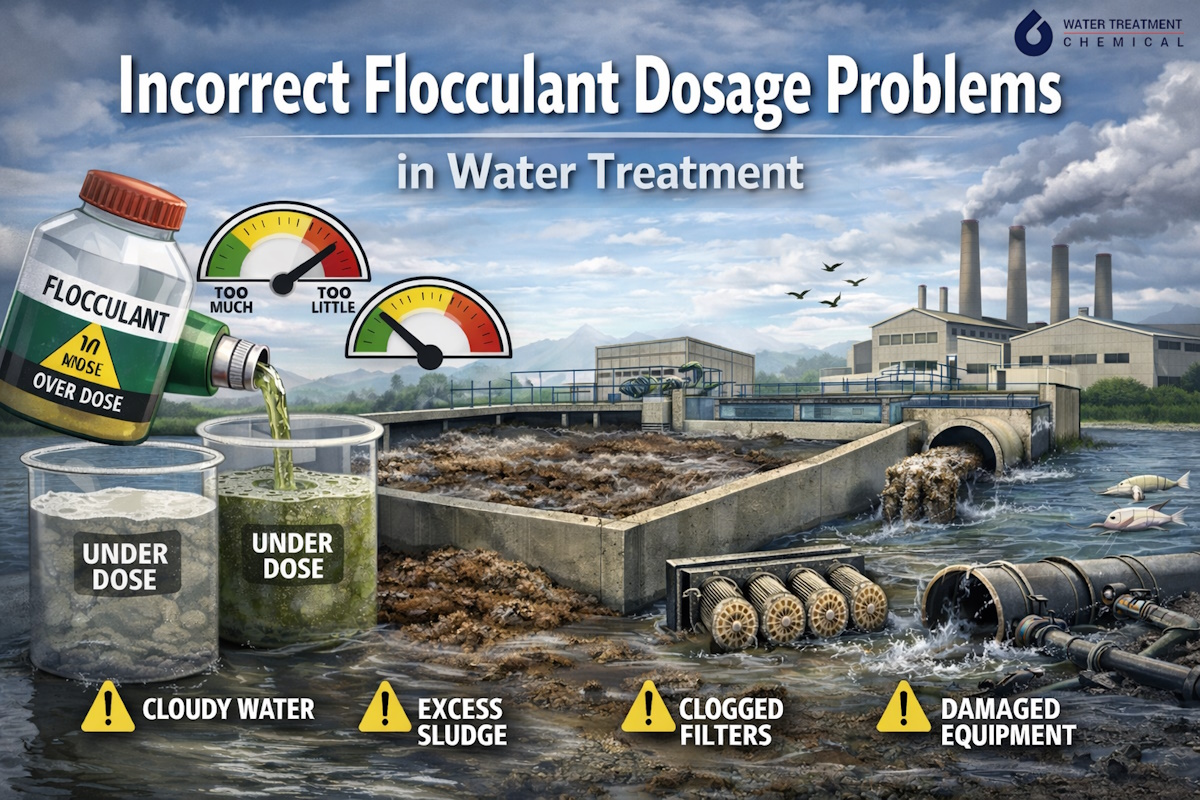
Water treatment is an important process for industries, cities, and communities. Clean water is needed for drinking, manufacturing, farming, and many other daily uses. One key step in water treatment is flocculation. This step helps remove dirt, small particles, and impurities from water. A flocculating agent is added to the water to make these tiny particles stick together so they can settle or be filtered out.
While flocculation sounds simple, it needs careful control. One of the most common issues in water treatment systems is incorrect flocculant dosage problems. When the amount of flocculating agent added to water is too much or too little, it can create many serious problems. These problems can affect water quality, increase costs, damage equipment, and even cause environmental harm.
This article explains the common problems caused by incorrect flocculating agent dosage. It also explains why correct dosing matters, how mistakes happen, and how working with a reliable water treatment chemical supplier can help prevent these issues.
Not sure if incorrect flocculant dosage problems are affecting your water treatment system?
Understanding Flocculation in Simple Terms
Flocculation is a process where small particles in water join together to form larger clumps called flocs. These flocs are heavy enough to settle at the bottom of tanks or can be removed through filtration.
A flocculating agent is a chemical that helps this process. It works by reducing the forces that keep particles apart. Once these forces are reduced, particles can collide, stick together, and form flocs.
Flocculating agents are used in many areas such as:
- Drinking water treatment
- Wastewater treatment
- Industrial water processing
- Mining and mineral processing
- Paper and pulp industries
- Food and beverage production
In all these areas, dosage control is very important.
What Is Incorrect Flocculant Dosage
Incorrect flocculant dosage means adding the wrong amount of flocculating agent to the water. This can happen in two ways:
- Under dosing, which means adding too little flocculating agent
- Over dosing, which means adding too much flocculating agent
Both situations cause problems. Many operators believe that adding more chemical will improve results, but this is not true. In flocculation, balance is everything.
Incorrect flocculant dosage problems often come from poor testing, lack of training, changes in water quality, or using the wrong product.
Why Correct Dosage Matters So Much
The correct dosage ensures that particles bind properly without breaking apart or staying suspended. When dosage is correct:
- Water becomes clearer
- Sludge settles faster
- Filters work efficiently
- Chemical costs stay under control
- Equipment lasts longer
When dosage is incorrect, the opposite happens. Problems can spread across the entire water treatment system.
Common Problems Caused by Under Dosing Flocculating Agent
Under dosing happens when the amount of flocculating agent is not enough to bind particles effectively. This is one of the most common incorrect flocculant dosage problems in water treatment plants.
Poor Floc Formation
When too little flocculating agent is used, particles do not bind well. Instead of forming large, strong flocs, the water contains very small and weak flocs.
These weak flocs break apart easily and do not settle properly. As a result, water remains cloudy and dirty.
High Turbidity in Treated Water
Turbidity means how cloudy or dirty the water looks. Under dosing causes high turbidity because fine particles remain suspended in the water.
High turbidity is a serious issue, especially in drinking water treatment. It can affect taste, safety, and compliance with water quality standards.
Poor Sedimentation Performance
Sedimentation tanks are designed to let flocs settle at the bottom. When flocs are too small or weak, they do not settle as expected.
This leads to:
- Shorter settling time
- Increased load on filtration systems
- Higher risk of particles passing into final water
Overloading of Filters
When sedimentation does not work properly, filters must remove more particles than they are designed for. This causes filters to clog faster.
Frequent filter clogging leads to:
- Increased backwashing
- Higher water loss
- Increased energy use
- Shorter filter life
Higher Operational Costs
Although under dosing seems like a way to save chemicals, it often increases overall costs. Poor flocculation leads to more maintenance, more energy use, and more downtime.
Common Problems Caused by Over Dosing Flocculating Agent
Over dosing is another major source of incorrect flocculant dosage problems. Adding too much flocculating agent can be just as harmful as adding too little.
Restabilization of Particles
One of the biggest issues with over dosing is particle restabilization. When too much flocculating agent is added, particles can become coated with excess chemical.
Instead of sticking together, they repel each other again. This breaks apart flocs and makes water clarity worse.
Formation of Slimy or Sticky Flocs
Over dosing often creates flocs that are too sticky or slimy. These flocs do not settle well and can cause blockages in pipes and equipment.
Sticky flocs can also attach to tank walls, mixers, and sensors, causing maintenance issues.
Increased Sludge Volume
Adding too much flocculating agent increases the amount of sludge produced. This sludge contains excess chemical along with trapped solids.
High sludge volume causes problems such as:
- Higher disposal costs
- Increased handling requirements
- More storage space needed
Difficulty in Sludge Dewatering
Over dosed flocs often trap too much water. This makes sludge dewatering difficult and inefficient.
Poor dewatering leads to:
- Higher transport costs
- More landfill space needed
- Increased environmental impact
Chemical Residue in Treated Water
Excess flocculating agent can remain in treated water. This is especially concerning in drinking water treatment.
Chemical residue can affect water taste, safety, and regulatory compliance.
Need help selecting the right flocculating agent?
Impact on Equipment and Infrastructure
Incorrect flocculant dosage problems do not only affect water quality. They also damage equipment and infrastructure over time.
Pipe and Pump Blockages
Sticky or poorly formed flocs can accumulate inside pipes and pumps. This reduces flow and increases pressure.
Over time, this can cause:
- Pump failures
- Pipe corrosion
- Unexpected shutdowns
Damage to Mixing Systems
Flocculating agents must be mixed properly. Over dosing creates heavy flocs that stress mixers and agitators.
This increases wear and tear and shortens equipment life.
Sensor and Instrument Errors
Many treatment plants use sensors to measure turbidity, flow, and chemical levels. Excess flocs can coat sensors and give false readings.
False data leads to poor control decisions and further dosing errors.
Environmental Problems Linked to Incorrect Dosage
Environmental protection is a major concern in modern water treatment. Incorrect flocculant dosage problems can cause serious environmental harm.
Discharge of Poor Quality Effluent
If flocculation fails, treated water released into rivers or lakes may still contain high levels of suspended solids.
This can harm aquatic life and damage ecosystems.
Increased Chemical Load in Environment
Over dosing increases the amount of chemical released into sludge or wastewater streams. Some flocculating agents can persist in the environment.
This can affect soil quality and water bodies near disposal sites.
Higher Carbon Footprint
Incorrect dosing increases energy use, chemical production, and sludge transport. All of these increase the carbon footprint of the treatment process.
Why Incorrect Flocculant Dosage Happens
Understanding the causes helps prevent problems.
Changes in Raw Water Quality
Water quality changes due to rain, seasons, or industrial discharge. If dosage is not adjusted, flocculation performance drops.
Lack of Regular Testing
Jar testing and other dosage tests are essential. Without regular testing, operators rely on guesswork.
Poor Training of Operators
Flocculation is sensitive. Without proper training, operators may not understand how dosage affects performance.
Using the Wrong Flocculating Agent
Not all flocculating agents work the same. Choosing the wrong type can lead to dosing errors.
Unreliable Chemical Supply
Working with an unreliable water treatment chemical supplier can cause inconsistent product quality. This makes correct dosing difficult.
How a Reliable Water Treatment Chemical Supplier Helps
A trusted water treatment chemical supplier plays a big role in preventing incorrect flocculant dosage problems.
Consistent Product Quality
Reliable suppliers provide chemicals with consistent strength and composition. This allows accurate dosing.
Technical Support
Good suppliers offer technical guidance, testing support, and dosage recommendations based on water conditions.
Customized Solutions
Every water source is different. A professional supplier helps select the right flocculating agent for specific needs.
Training and Documentation
Many suppliers provide training materials and safety data to help operators use chemicals correctly.
Best Practices to Avoid Incorrect Flocculant Dosage Problems
Regular Jar Testing
Jar testing helps find the right dosage for current water conditions. It should be done regularly.
Monitor Water Quality Changes
Track changes in turbidity, pH, temperature, and flow rate. Adjust dosage accordingly.
Use Automated Dosing Systems
Automation reduces human error and maintains consistent dosing.
Maintain Equipment
Clean mixers, sensors, and tanks regularly to ensure accurate dosing and monitoring.
Work With Experienced Professionals
Consult experts and partner with a knowledgeable water treatment chemical supplier for ongoing support.
Long Term Benefits of Correct Flocculant Dosage
When dosage is correct, the entire treatment system works better.
- Improved water clarity
- Lower operating costs
- Reduced sludge volume
- Longer equipment life
- Better environmental compliance
Correct dosing is not just about chemical use. It is about system efficiency and sustainability.
Conclusion
Incorrect flocculant dosage problems are common but preventable. Both under dosing and over dosing of flocculating agent cause serious issues in water treatment systems. These problems affect water quality, equipment performance, operating costs, and the environment.
Understanding how flocculation works, monitoring water conditions, and applying the correct dosage are key steps in preventing these issues. Working closely with a reliable water treatment chemical supplier ensures access to quality products, technical expertise, and long term support.
In modern water treatment, precision matters. Correct flocculant dosage is not an option. It is a necessity for clean water, efficient operations, and environmental protection.
Looking for long term and reliable flocculation solutions?