
In today’s world, clean water and safe industrial processes are more important than ever. Many industries rely on special chemicals to improve water quality, support manufacturing, and protect the environment. One such important chemical is PAC Chemical. PAC Chemical plays a major role in water treatment solutions and many industrial applications.
This article will explain what PAC Chemical is, its properties, types and uses of PAC chemicals, and the many benefits it offers. Everything is written in simple English so it is easy to understand, even if you are new to this topic.
Looking for high-quality PAC Chemical for your water treatment needs?
Introduction to PAC Chemical
PAC Chemical stands for Poly Aluminium Chloride Chemical. It is a widely used water treatment chemical that helps remove dirt, harmful particles, and impurities from water. It is commonly used in drinking water treatment, wastewater treatment, and many industrial water treatment solutions.
PAC Chemical has become very popular because it works faster and more effectively than traditional chemicals like alum. It also produces less sludge, which makes water treatment easier and more cost-effective.
Industries, municipalities, and water treatment plants use PAC Chemical to make water safer for people and better for the environment.
What Is PAC Chemical?
PAC Chemical is an inorganic polymer chemical made from aluminum and chlorine. It is usually available in liquid or powder form. The chemical works by clumping together tiny particles in water so they become large enough to settle or be filtered out easily.
These tiny particles may include dust, mud, bacteria, organic waste, and other harmful substances. When PAC Chemical is added to water, it reacts quickly and forms flocs. Flocs are soft, visible clusters that trap impurities and help remove them from water.
Because of this ability, PAC Chemical is a key part of modern water treatment solutions.
Chemical Composition of PAC Chemical
PAC Chemical is mainly made of aluminum salts. The aluminum content helps it act as a strong coagulant. The chlorine part helps stabilize the chemical and improve its performance.
The general chemical formula of PAC Chemical can vary depending on the type and grade. Different formulations are designed for different applications, such as drinking water or industrial wastewater.
PAC Chemical has a higher charge density than traditional coagulants. This means it attracts impurities more strongly and works better in many conditions.
Physical Properties of PAC Chemical
Understanding the properties of PAC Chemical helps explain why it is so effective.
Appearance
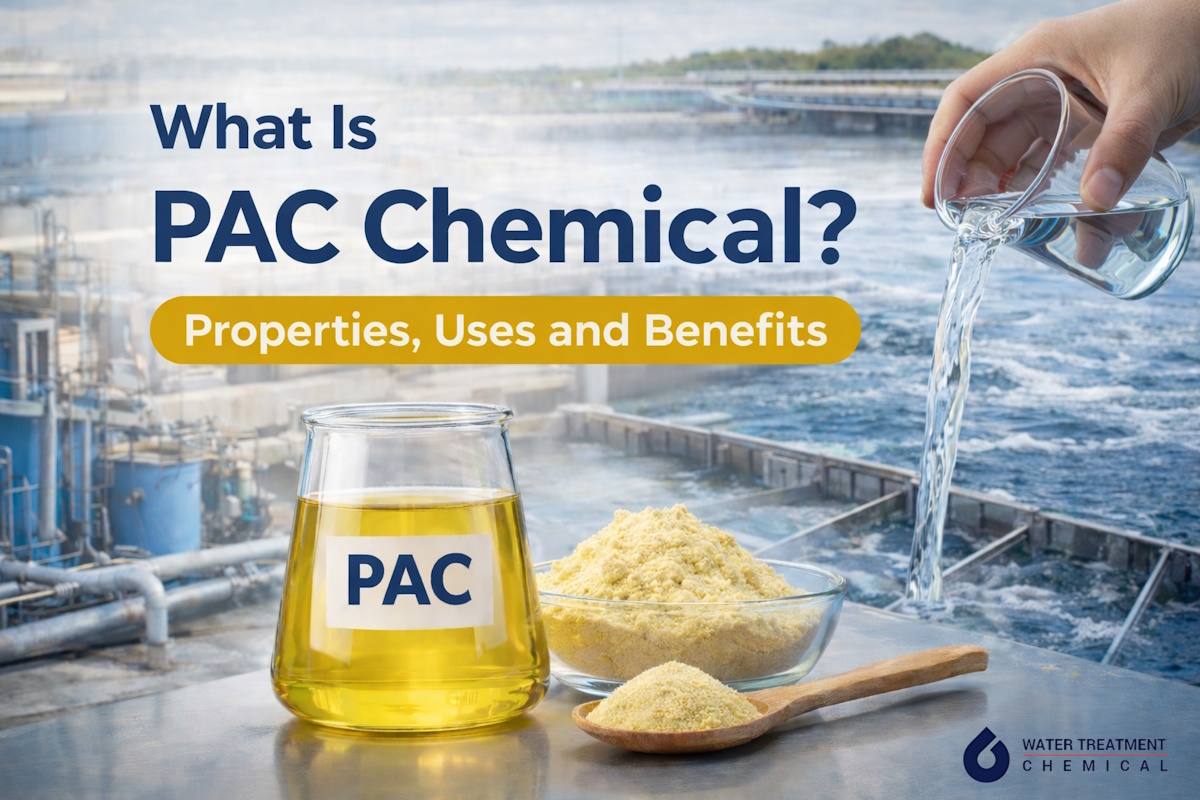
PAC Chemical usually appears as a yellowish liquid or pale yellow powder. The color may change slightly depending on purity and formulation.
Solubility
PAC Chemical dissolves easily in water. This makes it easy to use in water treatment systems without complex equipment.
Odor
PAC Chemical has a mild acidic smell but is not strong or irritating when handled correctly.
Stability
PAC Chemical is stable during storage when kept in proper conditions. It does not lose its effectiveness quickly, which makes it suitable for long-term use.
Chemical Properties of PAC Chemical
PAC Chemical has several chemical properties that make it superior to many other coagulants.
High Coagulation Efficiency
PAC Chemical works effectively across a wide range of water conditions. It can handle water with high turbidity and organic content.
Wide pH Range
PAC Chemical performs well in a wide pH range, usually between pH 5 and pH 9. This reduces the need for extra pH adjustment chemicals.
Fast Reaction Time
PAC Chemical reacts quickly with impurities. This reduces treatment time and improves process efficiency.
Low Sludge Production
Compared to alum, PAC Chemical produces less sludge. This lowers disposal costs and reduces environmental impact.
How PAC Chemical Works in Water Treatment
PAC Chemical works mainly through coagulation and flocculation.
When added to water, PAC Chemical releases positively charged aluminum ions. These ions neutralize the negative charges of suspended particles in water. Once neutralized, the particles can stick together and form flocs.
These flocs grow larger and heavier. They either settle at the bottom or are removed through filtration. This process removes impurities, improves clarity, and makes water safer for use.
Because of this mechanism, PAC Chemical is a key ingredient in modern water treatment solutions.
Types and Uses of PAC Chemicals
There are different types of PAC Chemical available, each designed for specific applications. Understanding the types and uses of PAC chemicals helps users choose the right product.
Liquid PAC Chemical
Liquid PAC Chemical is widely used due to its ease of handling and quick mixing.
Uses
- Drinking water treatment plants
- Municipal water treatment systems
- Industrial wastewater treatment
- Paper and pulp industry
Liquid PAC Chemical is preferred when quick dosing and uniform mixing are needed.
Powder PAC Chemical
Powder PAC Chemical is more concentrated and has a longer shelf life.
Uses
- Remote water treatment facilities
- Emergency water treatment
- Industrial processes where storage space is limited
Powder PAC Chemical must be dissolved before use, but it offers flexibility and cost savings in transportation.
High Basicity PAC Chemical
High basicity PAC Chemical contains more aluminum polymer chains.
Uses
- Water with high organic content
- Cold water treatment
- Advanced water treatment solutions
This type provides stronger coagulation and better performance in difficult water conditions.
Low Basicity PAC Chemical
Low basicity PAC Chemical is closer to traditional aluminum salts.
Uses
- Wastewater treatment
- Industrial effluent treatment
- Applications where pH control is critical
Not sure which PAC Chemical is right for your application?
Uses of PAC Chemical in Water Treatment Solutions
Water treatment solutions rely heavily on PAC Chemical due to its versatility.
Drinking Water Treatment
PAC Chemical helps remove dirt, bacteria, and harmful particles from raw water. It improves water clarity, taste, and safety. Many cities use PAC Chemical to ensure clean drinking water for their residents.
Wastewater Treatment
In wastewater treatment, PAC Chemical removes suspended solids, oils, and organic matter. It helps industries meet environmental discharge standards.
Industrial Water Treatment
Industries use PAC Chemical to treat process water, cooling water, and boiler feed water. This improves equipment performance and reduces maintenance costs.
Sewage Treatment
PAC Chemical improves solid separation in sewage treatment plants. It reduces odor, improves settling, and enhances overall treatment efficiency.
Uses of PAC Chemical in Different Industries
PAC Chemical is not limited to water treatment alone. It plays a role in many industries.
Paper and Pulp Industry
PAC Chemical improves paper quality by controlling pitch and improving fiber bonding. It also helps treat wastewater from paper mills.
Textile Industry
The textile industry uses PAC Chemical to treat dye wastewater. It helps remove color and suspended solids, making wastewater safer for discharge.
Food and Beverage Industry
PAC Chemical is used in water purification systems for food and beverage production. It ensures clean water for processing and cleaning.
Chemical Manufacturing
In chemical plants, PAC Chemical is used to treat process water and manage wastewater efficiently.
Benefits of Using PAC Chemical
PAC Chemical offers many advantages that make it a preferred choice.
High Efficiency
PAC Chemical works faster and more effectively than traditional coagulants. This leads to better water quality in less time.
Cost Effective
Although PAC Chemical may cost more per unit, it requires lower dosage. This reduces overall treatment costs.
Environment Friendly
Lower sludge production means less waste and reduced environmental impact.
Easy Handling
PAC Chemical is easy to store, transport, and apply. Both liquid and powder forms are user friendly.
Consistent Performance
PAC Chemical provides stable and reliable results even when water quality changes.
Comparison Between PAC Chemical and Alum
Many people compare PAC Chemical with alum.
PAC Chemical works in a wider pH range. It produces less sludge and requires lower dosage. Alum is cheaper but often less efficient and produces more waste.
Because of these reasons, many water treatment solutions are shifting from alum to PAC Chemical.
Safety and Handling of PAC Chemical
PAC Chemical is safe when used correctly.
Storage
Store PAC Chemical in a cool, dry place away from direct sunlight.
Handling
Use protective gloves and eyewear during handling.
Transportation
Ensure containers are sealed properly to avoid leakage.
Following safety guidelines ensures effective and safe use.
Environmental Impact of PAC Chemical
PAC Chemical helps protect the environment by improving wastewater quality. It reduces pollution and helps industries meet environmental laws.
Because it produces less sludge, disposal is easier and less harmful.
Role of PAC Chemical in Sustainable Water Treatment Solutions
Sustainable water treatment solutions aim to reduce waste and energy use. PAC Chemical supports these goals by working efficiently at lower doses and producing less waste.
It helps conserve resources and supports clean water initiatives worldwide.
Choosing the Right PAC Chemical
Selecting the right PAC Chemical depends on water quality, application type, and treatment goals. Consulting with experts helps ensure the best results.
Future of PAC Chemical
As water scarcity and pollution increase, the demand for efficient water treatment solutions will grow. PAC Chemical is expected to play an even bigger role in future water treatment technologies.
Research continues to improve its performance and environmental safety.
Conclusion
PAC Chemical is an essential chemical in modern water treatment solutions. Its strong coagulation ability, wide application range, and cost efficiency make it a preferred choice across industries.
Understanding the types and uses of PAC chemicals helps users apply them effectively. From drinking water purification to industrial wastewater treatment, PAC Chemical improves water quality and protects the environment.
As industries and communities focus more on sustainability, PAC Chemical will continue to support cleaner water and safer industrial processes.
Ready to improve your water treatment solutions with PAC Chemical?