
Water treatment is one of the most important processes used to make water safe for human use and to protect the environment. Every day, water from rivers, lakes, and wastewater systems goes through several treatment stages before it can be reused or released back into nature. Among these stages, flocculation plays a major role in removing impurities and making water clearer.
Flocculation helps gather tiny particles in water so they can form larger clumps. These clumps settle easily and can then be removed through sedimentation or filtration. Without this step, many harmful particles would remain suspended in the water.
This process becomes even more effective when used along with proper chemicals and treatment methods. In modern water systems, both primary and secondary treatment stages rely on flocculation in different ways. Understanding the difference between these two stages helps industries, municipalities, and treatment facilities choose the right chemicals and processes.
This article explains the concept of flocculation, how it works in primary and secondary water treatment, and how a reliable water treatment chemical supplier plays a key role in maintaining clean and safe water systems.
Looking for the right chemicals to improve your water treatment process?
Understanding Flocculation in Water Treatment
Before comparing primary and secondary treatment stages, it is important to understand the meaning of flocculation and why it is necessary.
Flocculation is a process where very small particles in water combine to form larger groups called flocs. These particles may include dirt, organic matter, bacteria, oils, and other contaminants that cannot easily settle on their own.
Most of these particles carry a similar electrical charge, which causes them to repel each other. Because of this repulsion, they stay suspended in water for a long time. Flocculation works by neutralizing these charges so that particles can come together.
During the process, chemicals called flocculants are added to water. Gentle mixing then helps particles collide and stick together, forming visible flocs. Once these flocs become heavy enough, they settle at the bottom of the tank and can be removed.
This step is often used after coagulation, where chemicals are first added to destabilize particles. Together, coagulation and flocculation help remove a large portion of suspended matter from water.
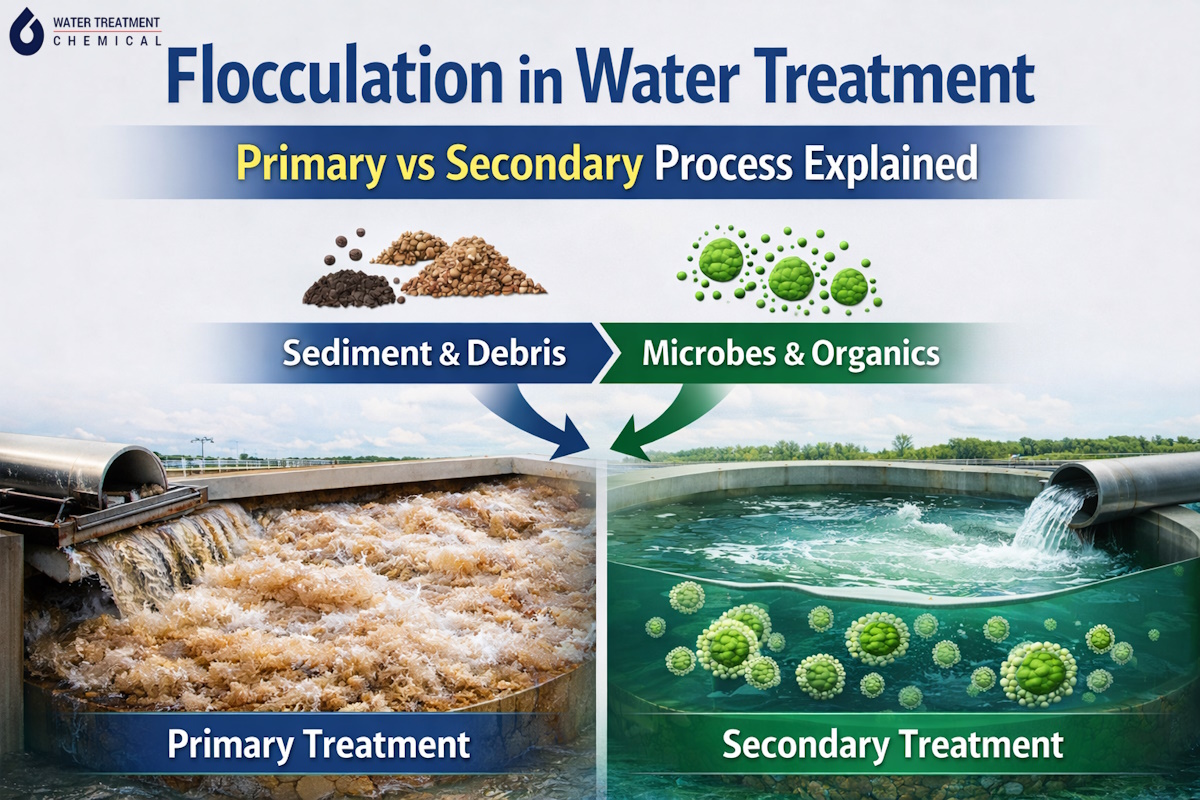
Primary flocculation in water treatment focuses mainly on removing large and easily settleable particles, while secondary treatment focuses more on removing dissolved and biological contaminants.
Primary – Flocculation in Water Treatment
Primary water treatment is the first major step in many water purification systems. The main goal at this stage is to remove solid particles, floating debris, and other large contaminants.
In this stage, Flocculation in Water Treatment plays an important role in preparing water for the next treatment steps.
Purpose of Primary Flocculation
Primary treatment targets materials that are physically present in water. These include sand, silt, organic debris, grease, and other suspended solids.
Even though some of these particles can settle naturally, many remain suspended due to their small size or electrical charge. Flocculation helps gather these particles together so they can settle faster.
The main objectives of flocculation in primary treatment include:
- Removing suspended solids
- Reducing turbidity in water
- Improving the efficiency of sedimentation
- Preparing water for further treatment processes
How the Process Works
The primary flocculation process usually follows these steps:
- Coagulant Addition
A coagulant chemical such as alum or ferric chloride is added to the water. This step destabilizes suspended particles. - Gentle Mixing
The water is slowly mixed so that particles can come into contact with each other. - Formation of Flocs
As mixing continues, particles stick together and form larger clusters known as flocs. - Sedimentation
The formed flocs settle at the bottom of the sedimentation tank where they can be removed as sludge.
Benefits of Flocculation in Primary Treatment
Primary flocculation offers several advantages in water treatment systems:
- It removes a large portion of suspended matter early in the process
- It improves the performance of filtration systems
- It reduces the load on later treatment stages
- It helps achieve clearer water before secondary treatment begins
Without proper primary flocculation, treatment plants would struggle to remove large quantities of suspended solids.
Secondary – Role of Flocculating Agent in Water Treatment
While primary treatment focuses on removing physical solids, secondary treatment mainly targets biological and dissolved contaminants.
At this stage, microorganisms break down organic matter that remains in the water. However, even after biological treatment, many small particles remain suspended. This is where a Flocculating Agent becomes very important.
What Is a Flocculating Agent?
A flocculating agent is a chemical substance that helps suspended particles gather into larger clusters. These agents are usually polymers that bind particles together.
Common flocculating agents used in water treatment include:
- Polyacrylamide based polymers
- Natural polymer flocculants
- Synthetic organic flocculants
These chemicals improve particle aggregation and make it easier for solids to settle or be filtered out.
Need help selecting the right flocculating agents for your treatment system?
Role in Secondary Treatment
In secondary treatment, biological processes such as activated sludge systems break down organic material. Microorganisms feed on the waste and convert it into biomass.
During this process, large numbers of microbial cells remain suspended in water. These cells must be removed before the water moves to the next stage.
Flocculating agents help by:
- Binding microbial cells together
- Forming dense flocs that settle quickly
- Improving sludge separation
The result is cleaner water and better sludge management.
Importance in Sludge Settling
One of the main challenges in biological treatment is poor sludge settling. When sludge does not settle well, it causes cloudy water and reduces treatment efficiency.
Adding a flocculating agent helps produce stronger flocs that settle rapidly. This improves the clarity of treated water and keeps the system running smoothly.
Understanding Flocculating and Deflocculating Agents
Water treatment systems often require a balance between particle aggregation and dispersion. This is why both flocculating and deflocculating agents are used in different situations.
Flocculating Agents
Flocculating agents promote the gathering of particles. They help small suspended solids combine and form larger clusters.
These agents are widely used in:
- Municipal water treatment plants
- Industrial wastewater treatment
- Mining and mineral processing
- Paper and pulp industries
They improve sedimentation, filtration, and sludge removal.
Deflocculating Agents
Deflocculating agents perform the opposite function. Instead of promoting particle aggregation, they disperse particles and prevent them from forming clusters.
These chemicals are used when it is necessary to maintain a stable suspension of particles.
Applications include:
- Ceramic processing
- Paint production
- Some industrial chemical systems
In water treatment, deflocculating agents are used less often than flocculating agents, but they can help control certain processes where particle dispersion is required.
Understanding the difference between flocculating and deflocculating agents helps treatment facilities maintain better control over water quality.
Differences Between Primary and Secondary Flocculation
Even though both stages use flocculation, their goals and operating conditions are different.
Treatment Objectives
Primary flocculation focuses on removing large suspended solids and reducing turbidity.
Secondary flocculation focuses on removing biological solids and fine particles after microbial treatment.
Type of Contaminants Removed
Primary treatment targets:
- Sand and silt
- Organic debris
- Floating particles
Secondary treatment targets:
- Microbial biomass
- Organic residues
- Fine suspended solids
Chemical Usage
Primary treatment often uses traditional coagulants such as alum or ferric salts.
Secondary treatment uses more specialized flocculating agents, often polymer based.
Process Conditions
Primary flocculation occurs before biological treatment and deals with higher levels of raw solids.
Secondary flocculation occurs after biological processes and deals with finer and more complex particles.
These differences highlight why treatment plants must carefully select the right chemicals and operating conditions for each stage.
Importance of a Reliable Water Treatment Chemical Supplier
Water treatment plants rely heavily on high quality chemicals to maintain efficient operations. Choosing the right water treatment chemical supplier is therefore very important.
A good supplier does more than just provide chemicals. They also offer technical knowledge, product consistency, and support for optimizing treatment processes.
Quality and Consistency
Treatment chemicals must meet strict quality standards. Poor quality chemicals can reduce treatment efficiency and increase operational costs.
Reliable suppliers ensure that their products are consistent and meet industry standards.
Technical Support
Water treatment processes often require adjustments based on water quality and operational conditions.
A knowledgeable supplier can help facilities select the right flocculating agents and optimize dosage levels.
Customized Solutions
Different industries have different water treatment needs. For example:
- Municipal water plants handle drinking water and sewage
- Food industries require strict hygiene standards
- Textile industries produce dye contaminated wastewater
A good water treatment chemical supplier can provide customized chemical solutions for each situation.
Cost Efficiency
High quality chemicals may appear more expensive at first, but they often reduce overall costs by improving treatment efficiency and reducing sludge production.
Working with a trusted supplier ensures better long term performance.
Industrial Applications of Flocculation
Flocculation is used across many industries beyond municipal water treatment.
Municipal Water Treatment
Cities rely on flocculation to remove suspended particles and make drinking water safe.
Wastewater Treatment Plants
Industrial and municipal wastewater systems use flocculating agents to remove solids and improve sludge separation.
Mining Industry
Mining operations use flocculation to separate valuable minerals from waste materials.
Food and Beverage Industry
Food processing plants treat wastewater before discharge to meet environmental regulations.
Textile Industry
Textile wastewater contains dyes and chemicals that require effective flocculation for removal.
In each of these industries, the proper use of flocculating agents helps maintain efficient and environmentally safe operations.
Future Trends in Flocculation Technology
Water treatment technology continues to evolve as industries seek better and more sustainable solutions.
Some emerging trends include:
Eco Friendly Flocculants
Researchers are developing natural polymer based flocculants that are biodegradable and safer for the environment.
Advanced Polymer Technology
New polymer formulations improve floc formation and reduce the amount of chemical required.
Smart Treatment Systems
Modern treatment plants are adopting automated monitoring systems that adjust chemical dosing based on real time water quality data.
These developments help improve treatment efficiency while reducing environmental impact.
Conclusion
Flocculation is a critical process in modern water treatment systems. It allows treatment facilities to remove suspended particles and improve water clarity.
In Flocculation in Water Treatment during the primary stage, the main goal is to remove large suspended solids and reduce turbidity. This prepares water for more advanced treatment processes.
In the secondary stage, the use of a Flocculating Agent becomes essential for removing biological solids and fine particles formed during microbial treatment.
Understanding the role of flocculating and deflocculating agents helps treatment facilities control particle behavior and optimize treatment performance.
Equally important is working with a reliable water treatment chemical supplier who can provide high quality products and technical support.
As water demand continues to grow and environmental regulations become stricter, effective flocculation will remain a key part of sustainable water management. By combining proper treatment methods with high quality chemicals, industries and municipalities can ensure clean and safe water for future generations.
Want to improve your water treatment efficiency with the right chemicals?