
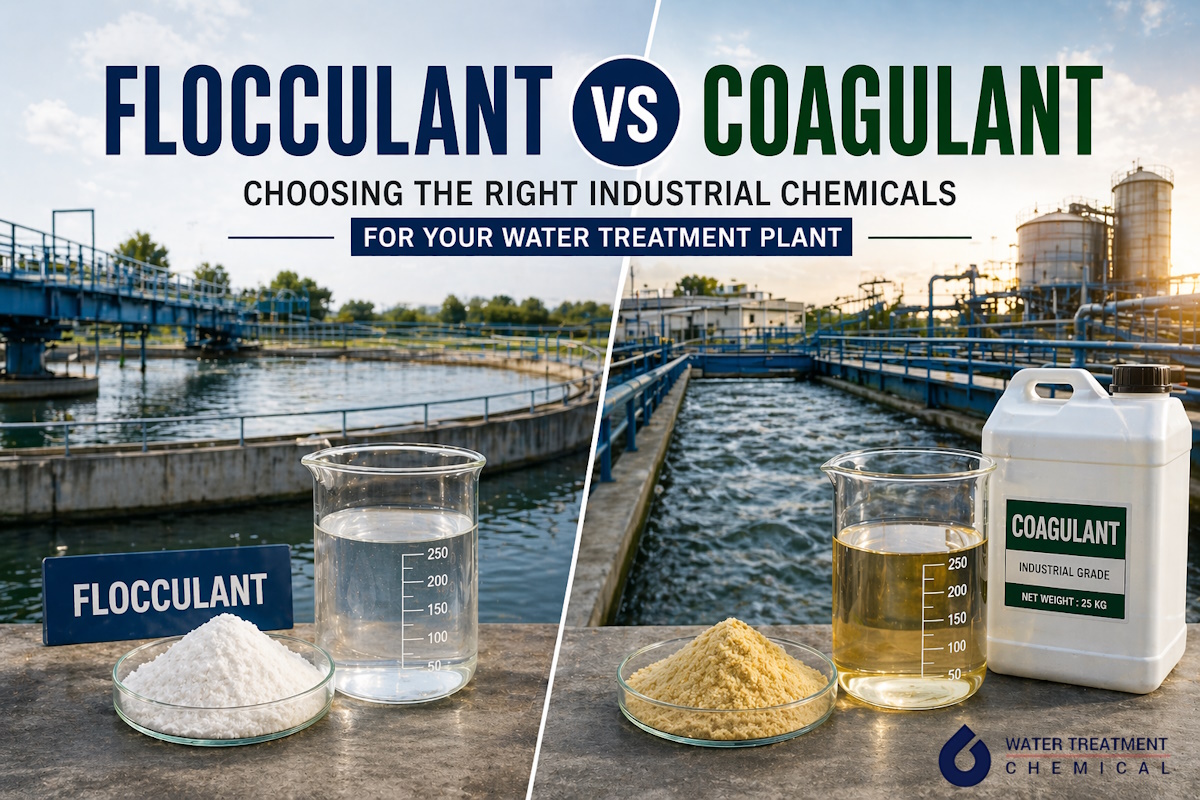
Understanding the Roles of Coagulants and Flocculants in Water Treatment
In industrial water treatment, achieving high-quality effluent is a complex process. Two critical players in this process are coagulants and flocculants. While both are used to remove suspended solids, they function differently. Making the right choice between a flocculant vs coagulant can significantly impact the efficiency and cost-effectiveness of your water treatment plant. Understanding their distinct roles is the first step toward optimizing your treatment process and ensuring compliance with discharge regulations. Selecting the right industrial water treatment chemicals is essential to the success of your water treatment program.
Coagulation is the initial step, destabilizing the suspended particles. These particles, such as silt, clay, and organic matter, carry negative charges, causing them to repel each other. A coagulant neutralizes these charges, allowing the particles to come closer. Flocculation follows, where a flocculating agent promotes the clumping of these neutralized particles into larger masses, or flocs, that are easier to remove through sedimentation or filtration. This two-step process is fundamental to clarifying water and making it suitable for reuse or safe discharge. This process helps achieve the water quality standards your plant needs.
Do you need help choosing the right coagulant for your industrial water treatment needs?
The Action of Coagulants
Coagulants work by neutralizing the negative electrical charges on suspended particles in the water. This destabilization allows the particles to come close together. The process forms micro-flocs, which are tiny, almost invisible clumps of particles. These micro-flocs are the precursors to the larger flocs formed during flocculation. Common coagulants include inorganic salts like aluminum sulfate (alum), ferric chloride, and polymers like poly-DADMAC. The selection of a coagulant depends on the specific characteristics of the wastewater, including its pH, turbidity, and the types of contaminants present. Optimizing the coagulant dose is crucial; too little may be ineffective, while too much can lead to increased sludge production and higher treatment costs.
When to Use Coagulants
Coagulants are primarily used in the initial stages of water treatment to prepare the water for the next steps. They are most effective in removing turbidity, color, and certain dissolved contaminants. In industrial settings, coagulants are essential in treating wastewater from various industries, including food processing, textile manufacturing, and chemical plants. The effectiveness of a coagulant is often assessed by the clarity of the water after treatment, along with tests to measure the remaining suspended solids and other pollutants. The right coagulant, like polyaluminium chloride in water treatment, is key to meeting compliance standards.
The Flocculation Process: Building Larger Particles
Flocculation, the second critical step, involves bringing the destabilized particles together to form larger, settleable flocs. This process is achieved by adding a flocculating agent, usually a long-chain polymer. These polymers act as bridges, linking the micro-flocs created by coagulation into larger, more easily removed aggregates. The efficiency of flocculation depends on several factors, including the type and dosage of the flocculant, the mixing conditions, and the characteristics of the water being treated. Effective flocculation results in the formation of robust flocs that settle rapidly, reducing the load on downstream treatment processes like filtration and sedimentation.
Flocculant Types and Their Applications
Flocculants are broadly classified into three types: anionic, cationic, and non-ionic. Anionic flocculants are negatively charged and are typically used to treat wastewater with positively charged particles. Cationic flocculants are positively charged and are used for negatively charged particles. Non-ionic flocculants have no charge and can be used in a wider range of applications. The choice of flocculant depends on the specific contaminants present, the water’s pH, and the overall treatment goals. Different industries may require different flocculants. For example, textile industry wastewater often benefits from specific flocculants due to the nature of dyes and chemicals used in the processes.
Optimizing Flocculation for Enhanced Efficiency
Optimizing flocculation involves several key considerations. The type and dosage of the flocculant must be carefully chosen to match the characteristics of the wastewater. Proper mixing is crucial to ensure that the flocculant is evenly distributed and that the micro-flocs have enough contact to form larger flocs. The mixing intensity and duration are critical parameters. Insufficient mixing will not allow for effective floc formation, while excessive mixing can break apart the flocs, hindering settling. Regular monitoring and adjustment of flocculant dosage, mixing parameters, and settling times are essential to maintain optimal performance.
Are you facing challenges with flocculation in your water treatment plant?
Comparing Coagulants and Flocculants: Key Differences
The primary difference between a flocculant vs coagulant lies in their function. Coagulants destabilize particles, while flocculants aggregate them. Coagulants work by neutralizing charges, while flocculants act as bridges to form larger particles. Coagulation is typically a faster process, occurring within seconds to minutes, while flocculation may take longer, depending on the type of flocculant and mixing conditions. Coagulants are often inorganic salts or simple polymers, while flocculants are typically high-molecular-weight polymers. The choice between them, and their dosages, depends on the water characteristics and the desired treatment outcomes.
Factors Influencing Chemical Selection
Several factors influence the choice of coagulant and flocculant. The composition of the wastewater, including the types and concentrations of contaminants, is crucial. The pH of the water also plays a significant role, as it affects the effectiveness of both coagulants and flocculants. The desired effluent quality and the specific regulations that must be met also influence the selection process. Testing, such as jar tests, is commonly used to determine the optimal type and dosage of coagulant and flocculant for a given water sample. Jar tests allow operators to simulate different treatment scenarios and to observe the formation and settling of flocs.
Common Challenges and Troubleshooting
Common issues include inefficient floc formation, poor sludge settling, and high chemical costs. Inefficient floc formation can be caused by incorrect chemical dosages, inadequate mixing, or incompatible chemicals. Poor sludge settling may indicate that the flocs are too small, too light, or not robust enough. High chemical costs can result from overdosing or using the wrong type of chemical. To troubleshoot, you may need to adjust chemical dosages, optimize mixing parameters, or switch to a different chemical. Regular monitoring of the treatment process and a thorough understanding of the water chemistry are key to preventing and solving these problems.
Choosing the Right Chemicals for Your Plant
Selecting the right industrial water treatment chemicals for your plant is a critical decision that impacts operational efficiency, compliance, and cost. It’s essential to perform a thorough water analysis to understand your water’s composition. Conduct jar tests to evaluate different coagulants and flocculants under varying conditions. Consider the specific contaminants present in your wastewater, the desired effluent quality, and the applicable discharge regulations. Partnering with a reputable water treatment solutions provider can help you navigate this process. They can offer expert advice, assist with chemical selection, and optimize your treatment processes.
Best Practices for Chemical Dosing and Management
Accurate chemical dosing is crucial for optimal performance and cost-effectiveness. Implement a reliable dosing system that can be precisely calibrated. Regularly monitor chemical dosages and adjust as needed, based on water quality parameters. Ensure proper storage and handling of chemicals to maintain their effectiveness and prevent safety hazards. Establish a system for tracking chemical usage and costs. Regular maintenance of the dosing equipment will help prevent mechanical failures. Proper chemical selection is essential to any industrial water treatment plant.
Case Studies and Real-World Examples
Many industrial plants have successfully improved their water treatment processes by optimizing their use of coagulants and flocculants. For example, a textile plant might reduce its effluent color and improve its ability to meet discharge standards by switching to a more effective flocculant. A food processing facility could reduce its sludge volume and improve clarification by optimizing the dosage of its coagulant. These examples highlight the benefits of a proactive approach to chemical selection and dosing. These real-world examples highlight the value of appropriate water treatment solutions.
Want to speak with a water treatment expert to solve your flocculation issues?