
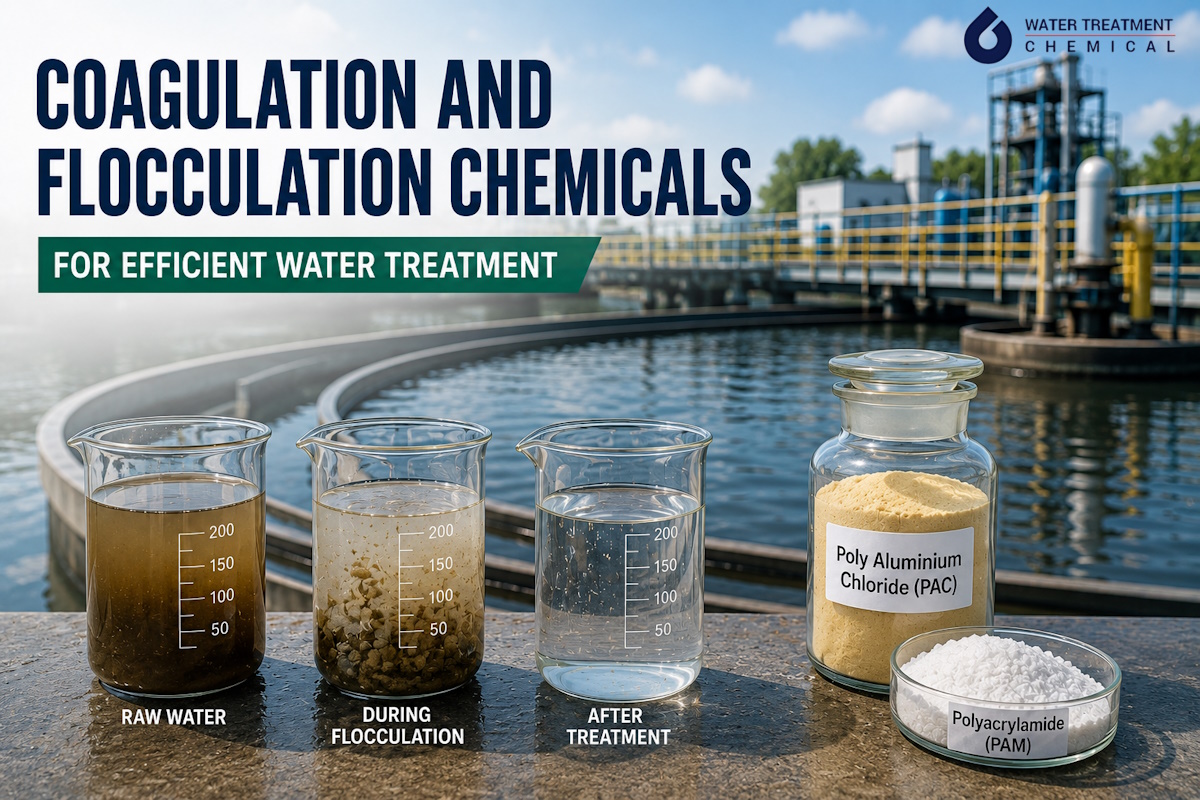
Maintaining the efficiency of an industrial effluent treatment plant or sewage treatment plant is a continuous struggle against fluctuating raw water quality, strict regulatory discharge norms, and rising operational costs. At the heart of most solid liquid separation processes lies the physical chemical treatment stage, which relies heavily on the principles of coagulation and flocculation. Selecting the right chemical formulations for this stage dictates not only the clarity of the treated water but also the volume of sludge generated, the lifespan of downstream filtration membranes, and the overall cost of plant operations. When plant managers look to optimize these processes, the initial step involves understanding where to buy high quality chemicals and how to evaluate a potential technical partner.
Procuring these specialized formulations is not merely a matter of finding the lowest cost per bag or drum. It requires a deep understanding of how different chemical agents interact with specific industrial wastewater streams, which vary widely between textile, pharmaceutical, food and beverage, and chemical manufacturing sectors. A minor change in pH, temperature, or organic load can render a standard chemical regimen ineffective, leading to carryover, membrane fouling, and potential environmental non-compliance. Working with established industrial water treatment chemicals manufacturers helps ensure that your facility receives not just a chemical product, but a tailored solution backed by application expertise, laboratory testing, and consistent quality control.
Looking for Coagulation and Flocculation Chemicals?
Understanding the Science Behind Coagulation and Flocculation in Water Treatment
To make an informed purchasing decision, it is essential to first understand the distinct roles that chemical agents play during physical chemical treatment. Colloidal particles suspended in wastewater carry negative electrical charges that cause them to repel one another, preventing them from settling naturally. The process of coagulation and flocculation in water treatment destabilizes these charges and aggregates the fine particles into larger, rapidly settling masses that can be easily removed by sedimentation, flotation, or filtration.
The Chemistry of Charge Neutralization in Coagulation
Coagulation is the chemical process of neutralizing the negative charges on colloidal suspended solids. When a coagulant is dosed into the water, it rapidly hydrolyzes to form positively charged metal hydroxide complexes or cationic polymers. These positive charges attract and neutralize the negative charges of the suspended colloids, eliminating the repulsive forces between them. Once neutralized, the particles can collide and begin to form microflocs. This step requires rapid, high shear mixing to distribute the coagulant uniformly throughout the water stream before the hydrolysis products can precipitate. Selecting a premium coagulant from an experienced water treatment chemical supplier ensures that the charge neutralization occurs efficiently within seconds, preventing chemical wastage and minimizing the downstream carryover of unreacted metal salts.
Bridging and Particle Aggregation in Flocculation
Flocculation is a physical process that follows coagulation, where the destabilized microflocs are brought together to form larger, visible agglomerations known as macroflocs. This process relies on high molecular weight polymers, or polyelectrolytes, which act as bridging agents. These long chain molecules attach to multiple microflocs simultaneously, binding them together into a stable network. Unlike coagulation, flocculation requires gentle, low shear mixing to encourage particle collisions without breaking the fragile polymer bridges. Using high grade sludge dewatering polyelectrolyte formulations ensures that the macroflocs remain stable and resilient against shear forces as they transition to the clarifier or dewatering equipment.
Why Floc Size and Shear Sensitivity Matter in ETP and STP Operations
The physical characteristics of the formed flocs directly impact clarifier performance and sludge processing costs. If the flocs are too small or fragile, they can easily shear under the influence of pump impellers or turbulent flow, leading to poor overflow clarity and high total suspended solids in the effluent. Conversely, large and dense flocs settle rapidly, leaving behind clean, low turbidity water. When sourcing chemicals, it is critical to specify the required floc strength and settling velocity based on your plant clarifier design, as this determines whether you need a linear, branched, or cross linked polymer structure.
Key Chemicals Used in Coagulation and Flocculation
Industrial facilities utilize a wide range of coagulants and flocculants depending on the specific contaminants present in their wastewater, the system pH, and downstream processing equipment. Understanding the differences between these chemical categories helps procurement teams communicate effectively with technical suppliers and select the most cost effective options.
Inorganic Coagulants: Alum, Ferric Chloride, and Poly Aluminium Chloride PAC
Inorganic coagulants are the traditional workhorses of municipal and industrial water treatment. Aluminum sulfate, commonly known as alum, and ferric salts like ferric chloride or ferric sulfate are widely used due to their low raw material cost. However, they are highly sensitive to pH variations, consume significant alkalinity, and generate a substantial volume of metal hydroxide sludge that can be expensive to dewater and dispose of. To address these limitations, modern plants increasingly turn to pre hydrolyzed aluminum coagulants, such as Poly Aluminium Chloride PAC. These engineered inorganic coagulants operate efficiently over a wider pH range, consume less alkalinity, work faster at lower temperatures, and significantly reduce the volume of chemical sludge generated during treatment.
Organic Coagulants and Polyelectrolytes (Cationic, Anionic, and Non-ionic)
Organic coagulants, such as polydadmacs and polyamines, are highly charged cationic polymers that can either replace or complement inorganic coagulants. Because they do not add heavy metal ions to the water, they do not alter the pH and drastically reduce sludge volumes. Flocculants, on the other hand, are typically synthetic polyacrylamides available in cationic, anionic, or non ionic forms. Cationic polymers are highly effective for organic sludges and municipal STP operations, while anionic polymers are preferred for inorganic suspensions, mineral processing, and metal finishing wastewater. Non ionic polymers are typically reserved for specialized applications where charge interactions are secondary to physical bridging mechanisms.
Selecting Between Liquid and Powder Chemical Formulations
When purchasing polyelectrolytes, buyers must choose between dry powder and liquid emulsion formulations. Dry powders offer a longer shelf life and lower shipping costs per kilogram of active polymer, but they require specialized preparation systems with aging tanks to ensure complete dissolution without forming undissolved polymer gels, often referred to as fish eyes. Liquid emulsions are easier to disperse and automate, making them ideal for plants with limited operator intervention or smaller footprints, though they have a shorter shelf life and require careful storage to prevent phase separation.
Facing poor floc formation, slow settling, or high chemical consumption?
Identifying the Right Water Treatment Chemical Supplier
Finding a reliable source for coagulation and flocculation chemicals involves looking beyond simple product sheets and pricing grids. Because water chemistry is highly dynamic, a transactional relationship with a simple distributor can lead to operational failures when effluent characteristics inevitably change.
Why Commodity Brokers Fall Short Compared to Technical Manufacturers
Many chemical distributors operate as commodity brokers, sourcing materials from various low cost origins and selling them under generic labels. While this may offer short term cost savings, it exposes the buyer to severe risks, including batch to batch inconsistency, lack of technical support during plant upsets, and slow response times during supply chain disruptions. In contrast, partnering directly with established water treatment chemicals manufacturers in india provides plants with direct access to chemical synthesis experts, comprehensive quality assurance, and customized formulations designed specifically for challenging industrial effluents.
Evaluating Testing Capabilities and Jar Test Support
A reputable supplier must possess the capability to perform routine jar testing, which is the industry standard for evaluating the performance of different coagulant and flocculant combinations. Jar testing simulates the coagulation, flocculation, and settling stages of a treatment plant in a laboratory setting, allowing chemists to determine the precise chemical dosage, optimal pH range, and mixing speeds required for optimal clarity. A supplier that cannot offer on site or laboratory based jar testing is unable to guarantee that their products will work efficiently under your specific plant conditions.
Logistics, Supply Chain Stability, and Packaging Options in India
Industrial water treatment relies on a continuous, uninterrupted supply of chemicals to maintain regulatory compliance and prevent costly plant shutdowns. When evaluating a water treatment chemical supplier, always assess their manufacturing capacity, warehouse locations, and logistical capabilities. Furthermore, ensure they can provide flexible packaging options, ranging from 25 kg bags and 50 kg carboys to 1000 kg IBC totes or bulk tankers, depending on your facility daily chemical consumption and storage infrastructure.
Sourcing from Water Treatment Chemicals Manufacturers in India
India has emerged as a global hub for chemical manufacturing, offering advanced production facilities that meet international quality standards while maintaining competitive pricing structures. Sourcing directly from Indian manufacturers provides distinct advantages for both domestic plants and international buyers looking for reliable supply partnerships.
Custom Formulations for Complex Industrial Effluents
Many industrial wastewater streams contain a complex mix of surfactants, emulsified oils, dissolved organics, and heavy metals that cannot be adequately treated with standard off the shelf coagulants. Leading Indian manufacturers specialize in developing custom blended formulations, such as combining Poly Aluminium Chloride PAC with specific organic coagulants or decolorizing agents. These multi functional blends simplify the chemical dosing system, reduce the number of dosing pumps required at the plant, and improve the overall removal efficiency of targeted contaminants like dyes, chemical oxygen demand, and biochemical oxygen demand.
Quality Control, Certifications, and Batch-to-Batch Consistency
When purchasing chemicals for critical processes like drinking water purification or high pressure boiler feed systems, quality control is paramount. Leading manufacturers maintain ISO 9001, ISO 14001, and NSF certifications, ensuring that raw materials are carefully screened and finished products undergo rigorous batch testing before dispatch. Every shipment should be accompanied by a comprehensive Certificate of Analysis detailing key parameters such as active content, specific gravity, pH, and insoluble matter, giving plant operators peace of mind that the chemicals will perform consistently every time.
Evaluating the Total Cost of Ownership Beyond the Per-Kilogram Price
A common pitfall in chemical procurement is focusing solely on the unit price per kilogram of chemical. A cheaper, low active content coagulant often requires a significantly higher dosing rate, leading to increased chemical consumption, elevated freight costs, high sludge handling expenses, and potential damage to downstream RO antiscalants and membranes. Evaluating the total cost of ownership involves calculating the chemical cost per cubic meter of treated water, taking into account the dosing rate, sludge dewatering costs, and the lifetime of downstream filtration equipment.
Troubleshooting Common Coagulation and Flocculation Failures
Even with high quality chemicals, industrial treatment processes can experience sudden failures due to mechanical wear, operational changes, or environmental factors. Knowing how to diagnose and resolve these issues quickly is essential for preventing compliance violations and maintaining plant throughput.
Managing Fluctuation in Raw Water Quality and pH Levels
One of the most frequent causes of treatment failure is a sudden shift in the pH or alkalinity of the incoming wastewater. Most inorganic coagulants, such as alum, have a narrow pH window in which they can form the insoluble metal hydroxide precipitates necessary for charge neutralization. If the pH drops too low or rises too high, the coagulant remains dissolved in the water, resulting in high turbidity carryover and chemical waste. Implementing automated pH adjustment systems and utilizing pre hydrolyzed coagulants like PAC can help buffer the system against these sudden shifts, ensuring consistent floc formation even during process upsets.
Solving Pin Floc Issues and Slow Settling Rates
The term pin floc refers to extremely small, poorly defined flocs that do not settle easily and remain suspended in the clarifier overflow. This issue is typically caused by insufficient polymer dosing, incorrect polymer charge selection, or excessive mixing shear that breaks down the fragile macroflocs. Conversely, slow settling rates can occur if the floc density is too low, often due to inadequate coagulation or high organic loading. Adjusting the polymer dosage, optimizing the flocculator paddle speed, or introducing a denser weighting agent can help resolve these settling issues and restore clarifier performance.
Dosing Logic Optimization and Over-dosing Consequences
In water treatment, more is not always better. Over dosing coagulants can restabilize the colloidal particles by reversing their electrical charge, which leads to increased turbidity and poor settling. Similarly, over dosing polymer flocculants can cause the polymer chains to fold back on themselves or blind the filter media, resulting in high viscosity in the clarifier, rapid membrane fouling in downstream cooling tower chemicals systems, and increased resistance to sludge dewatering. Implementing precise dosing pumps, flow proportional dosing logic, and regular jar testing helps operators maintain the optimum dosage window.
Step-by-Step Guide to Purchasing Industrial Water Treatment Chemicals
To ensure a successful and trouble free chemical procurement process, industrial buyers should follow a structured, step by step evaluation methodology that aligns technical requirements with commercial expectations.
Technical Assessment and Water Analysis Stage
The procurement process should always begin with a detailed water analysis. Collect representative samples of the raw influent under different operating conditions, noting key parameters such as pH, temperature, total suspended solids, chemical oxygen demand, oil and grease content, and heavy metal concentrations. Share this data with your chosen water treatment chemical supplier so they can understand the specific contaminants that need to be targeted and recommend the most suitable chemical families for your application.
Trial Validation and Commercial Agreement Stage
Before committing to a long term supply contract, always conduct a pilot scale or full scale plant trial. Start by validating the supplier recommendations through laboratory jar tests to confirm the optimum dosage and floc characteristics. Once laboratory performance is established, transition to a controlled plant trial, closely monitoring clarifier turbidity, sludge volume, and dewatering efficiency over several days. Use the trial data to calculate the actual treatment cost per cubic meter, negotiate commercial terms, establish minimum inventory levels, and define clear key performance indicators for ongoing technical support.
Selecting the Ideal Chemical Partner for Long-Term ETP and STP Efficiency
Achieving consistent, high performance coagulation and flocculation in water treatment requires a synergy between high quality chemical formulations, precise dosing equipment, and expert process knowledge. By moving away from commodity brokers and partnering directly with technically capable manufacturers, industrial plants can secure consistent chemical quality, reliable technical support during crises, and continuous process optimization. This collaborative approach not only guarantees compliance with local pollution control boards but also drives down the total cost of plant operations, allowing facilities to focus on their core manufacturing objectives with complete peace of mind.
Need a Trusted Water Treatment Chemical Supplier?