
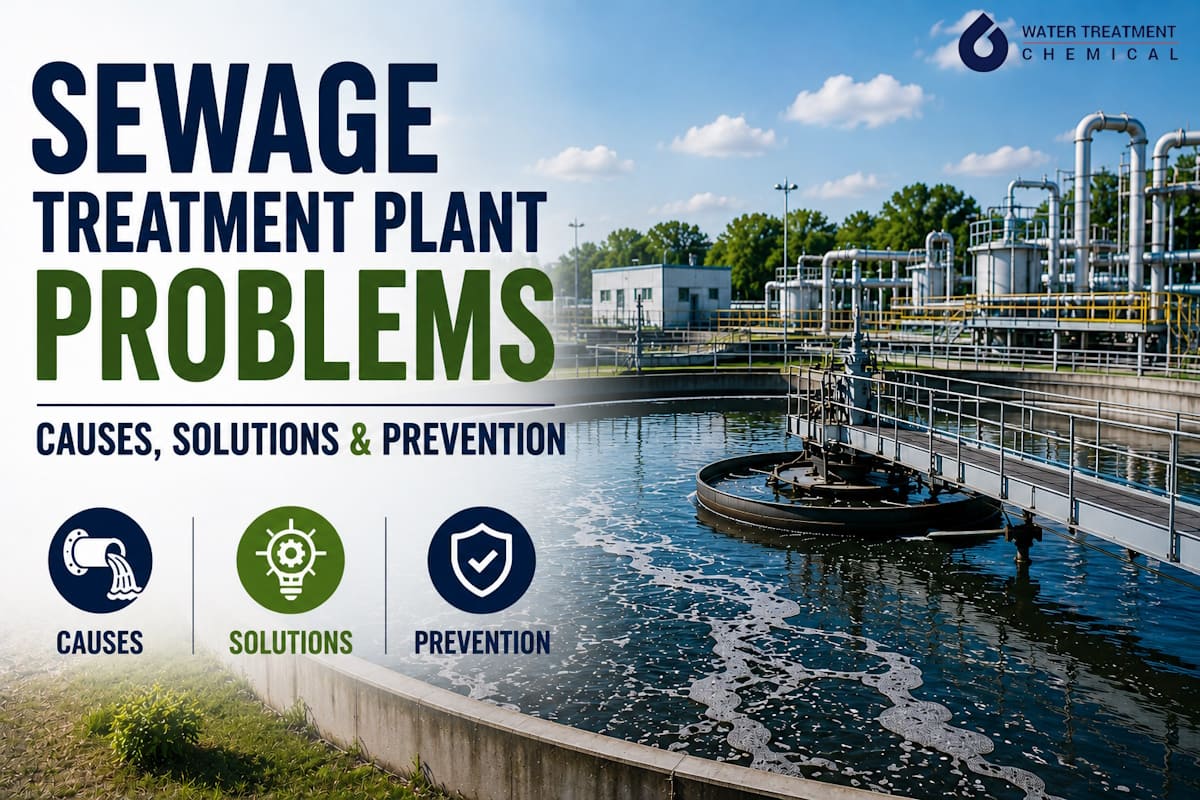
The operational realities of running a modern sewage treatment plant are highly complex. Fluctuating influent quality, variable hydraulic loads, and tightening environmental compliance standards put immense pressure on plant operators. When an municipal or industrial facility fails to meet discharge standards, the consequences range from heavy regulatory penalties to severe downstream environmental damage. Achieving consistent output quality requires a deep understanding of biological, physical, and chemical interactions within the system.
Many plant operators struggle with recurring issues like poor sludge settling, excessive foaming, elevated chemical oxygen demand (COD), and inadequate biological activity. While mechanical adjustments are necessary, optimizing your chemical treatment strategy is often the fastest and most cost-effective path to recovery. Implementing targeted sewage treatment chemicals ensures that your biological processes remain stable, solids separate cleanly, and the final effluent consistently meets all regulatory parameters.
Facing recurring sewage treatment plant issues?
Diagnosing Sewage Treatment Plant Problems
To implement an effective recovery strategy, operators must first diagnose the root cause of poor performance. System upsets are rarely isolated events. Instead, they represent a breakdown in the delicate balance between microbial health, chemical dosages, and hydraulic retention times. Proper diagnostics prevent operators from chasing symptoms and guide them toward sustainable system correction.
Hydraulic Overloading and Shock Loads
Hydraulic overloading occurs when the volumetric flow rate exceeds the design capacity of the secondary clarifiers and aeration basins. This issue is common during heavy rainfall events or sudden industrial production surges. When excess water rushes through the system, it reduces the hydraulic retention time needed for microbes to break down organic pollutants. Consequently, untreated organic matter and active biomass are washed out of the system, degrading effluent quality.
Recognizing Sudden Volume Spikes
Operators can detect hydraulic overloading by monitoring clarifier blanket levels and weir overflow rates. A rapidly rising sludge blanket or a visible carryover of solids over the effluent weirs indicates that the upward velocity of water is exceeding the settling velocity of the sludge particles. Utilizing targeted flocculants for wastewater treatment can artificially increase the settling rate of these particles, temporarily mitigating the effects of high hydraulic loads.
Biological Process Instability and Sludge Bulking
Biological treatment relies on a healthy population of aerobic and anaerobic microorganisms to digest dissolved organic compounds. Biological instability occurs when these microbes are exposed to toxic substances, extreme pH swings, or severe nutrient deficiencies. One of the most common manifestations of this instability is sludge bulking, where the sludge fails to compress or settle in the clarifier.
Filamentous Bacteria Overgrowth
Filamentous bulking is caused by the excessive growth of long, thread-like bacteria that project from the floc structure, preventing compact settling. This overgrowth is usually triggered by low dissolved oxygen levels, low food-to-microorganism ratios, or nutrient imbalances. Left unchecked, filamentous bulking leads to massive solids carryover and severe compliance failures. Restoring balance requires precise chemical control and operational adjustments to favor floc-forming bacteria over filamentous species.
Poor Solid-Liquid Separation and Turbid Effluent
Even when biological activity is optimal, poor solid-liquid separation can result in a turbid effluent. This issue is characterized by tiny, non-settling suspended solids, often referred to as pin floc. Pin floc occurs when the biological floc is fragile and easily sheared by turbulence, or when there is insufficient natural extracellular polymer to bind the microflocs together. Resolving turbid effluent requires the careful addition of synthetic polymers and primary coagulants to rebuild robust, fast-settling flocs.
To overcome these challenges, operators must work closely with an experienced water treatment chemical supplier who can analyze the unique water chemistry of the facility. Selecting the wrong chemical or applying an incorrect dosage can exacerbate settling problems, increase sludge volume, and raise operational costs.
Chemical Intervention Strategies for Common STP Failures
When biological systems are compromised or hydraulic limits are tested, chemical interventions provide immediate stabilization. Modern water treatment relies on highly specialized formulations to neutralize charges, bridge microflocs, and suppress undesirable microbiological activity. Understanding the specific mechanisms of these chemical tools allows operators to make precise adjustments under pressure.
Enhancing Coagulation with Polyaluminium Chloride
Coagulation is the critical first step in aggregating colloidal impurities that cause turbidity and organic load. Traditional metal salts like alum or ferric chloride often require large doses and significantly alter the pH of the water. This is where modern pre-neutralized inorganic coagulants offer a distinct operational advantage.
Mechanisms of Polyaluminium Chloride in Water Treatment
Applying polyaluminium chloride in water treatment provides rapid charge neutralization of negatively charged suspended particles. Because of its highly charged polymeric structure, it forms larger, heavier microflocs at much lower dosages compared to traditional alum. Additionally, it consumes less alkalinity, which helps maintain a stable pH environment for the downstream biological processes. This reduces the need for secondary pH adjustment chemicals, lowering overall treatment costs.
Optimizing Flocculation for Rapid Settling
Once coagulants neutralize the repulsive charges of colloidal particles, flocculation is required to bind these microflocs into large, heavy aggregates. This phase is heavily dependent on the molecular weight and ionic charge of the polymeric flocculant used.
Selecting Flocculants for Wastewater Treatment
Choosing the correct flocculants for wastewater treatment depends on the nature of the suspended solids. Highly cationic polymers are generally preferred for organic biological sludges, as they bind effectively with the naturally negative charges of biological membranes. Anionic polymers are more suitable for inorganic sludges or post-coagulation stages. Correct polymer selection increases sludge density, improves water clarity, and significantly enhances the performance of belt presses and centrifuges during dewatering operations.
Foam Control and Defoaming Protocols
Severe foaming in the aeration basin is a classic sign of biological upset, often associated with surfactant discharges or Nocardia bacteria growth. Excessive foam hinders oxygen transfer, presents safety hazards on walkways, and can carry solids out of the basin. While biological adjustments are made to address the root cause, immediate chemical suppression using silicone-based or water-based defoamers is necessary. These chemicals lower the surface tension of the liquid, causing the foam bubbles to collapse rapidly without harming the active biomass.
Need help selecting the right sewage treatment chemicals?
Troubleshooting Specific Operational Failures
A structured approach to sewage treatment plant troubleshooting requires operators to link specific symptoms to chemical and biological root causes. Rather than adjusting multiple process variables simultaneously, systematic troubleshooting isolates the primary chemical or physical deficiency to apply a targeted solution.
Remediation of High Chemical Oxygen Demand (COD) and Biological Oxygen Demand (BOD)
High COD and BOD levels in the final effluent indicate that organic compounds are passing through the biological process untamed. This failure occurs when the active biomass is under-dosed, toxic compounds inhibit biological activity, or the organic loading exceeds the design capacity. To resolve high COD and BOD, operators must optimize both the primary clarifier efficiency and the biological health of the secondary stage.
In many cases, poor primary clarifier performance sends an excessive organic load to the aeration tank. By optimizing the dosage of polyaluminium chloride in water treatment during primary clarification, operators can remove a higher percentage of insoluble organic matter before it reaches the biological stage. This relieves the metabolic stress on the aerobic microbes, allowing them to thoroughly digest the remaining dissolved organics.
Managing Odor Emission and Septicity
Odor issues in a sewage treatment plant are primarily caused by septic conditions, where anaerobic bacteria produce hydrogen sulfide, mercaptans, and organic acids. Septicity occurs in areas with low dissolved oxygen, poor mixing, or long retention times, such as equalization tanks and primary clarifiers. Hydrogen sulfide not only creates severe odor complaints from neighboring communities but also causes rapid corrosion of concrete basins and metal pipes.
Solving odor problems requires a combination of aeration optimization and targeted chemical additions. Oxidizing agents, such as hydrogen peroxide or sodium hypochlorite, can be dosed to oxidize sulfides immediately. Alternatively, nitrate-based formulations can be added to promote the growth of nitrate-reducing bacteria, which naturally suppress the biological pathways that generate hydrogen sulfide. Maintaining a steady dosing program prevents anaerobic pockets from forming, protecting infrastructure and community relations.
Sludge Dewatering and Volume Reduction Challenges
Sludge disposal represents one of the largest ongoing operational costs for any wastewater facility. If the biological or primary sludge is not dewatered effectively, the plant pays to transport and dispose of excess water rather than dry solids. Poor dewatering is often caused by incorrect polymer selection, degraded sludge age, or improper mixing in the dewatering feed line.
To optimize dewatering, operators must match the charge density and structure of the polymer to the specific sludge characteristics. Cationic polyacrylamides with high molecular weights are widely utilized to release bound water within the biological sludge matrix. Regular jar testing and real-time adjustments to the feed rate ensure maximum cake dryness and clean filtrate water, significantly reducing disposal tipping fees and polymer wastage.
Best Practices for Sewage Treatment Chemical Selection and Dosing
Selecting and applying sewage treatment chemicals requires a balance of laboratory evaluation and precise dosing control. Haphazardly dosing chemicals based on visual observation alone leads to chemical waste, elevated costs, and unpredictable effluent quality. Establishing a rigorous testing and dosing protocol is fundamental to long-term plant stability.
Conducting Jar Testing for Accurate Dosage
Jar testing remains the industry standard for evaluating chemical performance and determining the optimum dosage. It simulates the coagulation, flocculation, and settling processes on a laboratory bench scale, allowing operators to observe the effects of different chemicals without risking process upsets in the full-scale plant.
During jar testing, operators must evaluate key performance indicators, including floc formation speed, floc size, settling rate, supernatant clarity, and final pH. Testing should be performed whenever there is a significant change in influent flow, temperature, or chemical composition. This proactive approach ensures that the plant remains optimized under changing environmental conditions.
Establishing Inline Monitoring and Dosing Logic
Manual dosing adjustments are often too slow to respond to the rapid changes characteristic of industrial wastewater streams. Implementing inline monitoring systems, such as streaming current detectors, turbidimeters, and pH controllers, allows for automated chemical dosing. These systems continuously measure the charge neutralization of the water and adjust the coagulant pump speed in real time, preventing under-dosing during peak loads and over-dosing during low-flow periods.
Working with a Qualified Water Treatment Chemical Supplier
A reliable water treatment chemical supplier does more than deliver products. They serve as diagnostic partners who understand the intricate mechanics of your specific sewage treatment plant. A qualified supplier conducts regular onsite audits, performs laboratory jar testing, troubleshoots unexpected upsets, and reformulates products to meet changing regulatory demands. This collaborative approach minimizes chemical consumption while maximizing plant efficiency and compliance.
Troubleshooting Checklist for STP Operators
When operational parameters begin to drift, operators need a reliable, step-by-step diagnostic framework. Use the following structured checklist to isolate and resolve common sewage treatment plant problems before they escalate into regulatory violations.
Step 1: Verify Mechanical and Physical Parameters
- Dissolved Oxygen (DO): Ensure DO levels in the aeration basin are maintained between 1.5 to 2.0 mg/L. Low DO encourages filamentous bulking, while excessive DO can shear fragile flocs.
- Mixed Liquor Suspended Solids (MLSS): Check MLSS concentrations against design specifications. High MLSS can overload clarifiers, while low MLSS reduces biological treatment capacity.
- Return Activated Sludge (RAS) Rate: Verify that RAS pumps are operating correctly to prevent sludge from accumulating too long in the clarifier, which leads to denitrification and rising sludge.
Step 2: Assess Chemical Dosage and Coagulation Quality
- pH Levels: Monitor pH across all basins. Coagulants like polyaluminium chloride in water treatment perform best within a specific pH range, typically between 6.0 and 8.5.
- Coagulant Dosage: Check for signs of over-coagulation, which is characterized by pin floc formation and a reversal of particle charge, leading to high effluent turbidity.
- Polymer Feed System: Inspect polymer preparation systems for complete activation and dilution. Unraveling polymer chains properly is critical to achieving maximum flocculation efficiency.
Step 3: Analyze Sludge Settling Characteristics
- Sludge Volume Index (SVI): Perform a 30-minute settling test to calculate SVI. An SVI value between 80 and 150 mL/g indicates good settling sludge. Values above 150 mL/g suggest filamentous bulking.
- Sludge Blanket Depth: Measure the sludge blanket depth in the secondary clarifier. A rising blanket indicates either hydraulic overloading, poor settling, or insufficient Waste Activated Sludge (WAS) rates.
Implementing Long-Term Preventive Solutions
Relying solely on reactive troubleshooting is exhausting for operators and expensive for management. Transitioning to a proactive, preventive operational model is key to maintaining stable effluent quality and keeping operating costs predictable. This transition requires a combination of operator education, regular process monitoring, and the strategic application of advanced chemical technologies.
By establishing routine jar testing, maintaining precise control over sludge age, and partnering with a dedicated water treatment chemical supplier, facilities can anticipate upsets before they occur. Investing in high-quality coagulants and flocculants for wastewater treatment ensures that the physical and chemical processes remain resilient against fluctuating influent loads. Ultimately, a well-optimized chemical program protects your downstream biological processes, minimizes sludge generation, and guarantees consistent compliance with environmental regulations.
Ready to improve your sewage treatment plant performance?