
Understanding COD and Its Importance in Industrial Wastewater Treatment
In the world of industrial wastewater treatment, managing Chemical Oxygen Demand (COD) is a non-negotiable requirement. COD measures the amount of oxygen needed to oxidize organic pollutants in a water sample, serving as a key indicator of water quality. High COD levels signal the presence of significant organic contaminants, posing environmental and regulatory challenges.
For industrial facilities, effective COD removal efficiency directly impacts compliance with discharge standards, operational costs, and the overall environmental footprint. Failing to meet these standards can lead to hefty penalties, operational disruptions, and reputational damage. This is why selecting the right water treatment chemicals, such as coagulants and flocculants for wastewater treatment, is so crucial.
Struggling with high COD levels in your industrial wastewater?
PAC (Polyaluminium Chloride) in Industrial Wastewater Treatment
Polyaluminium Chloride, or PAC, is a widely used coagulant in industrial wastewater treatment. Its effectiveness stems from its ability to neutralize the electrical charges of suspended particles, causing them to destabilize and clump together. This process, known as coagulation, is the first step in removing pollutants.
Advantages of PAC
PAC offers several advantages that make it a preferred choice in many applications. One key benefit is its broad pH range effectiveness, allowing for efficient coagulation across varying wastewater conditions. It typically produces less sludge compared to other coagulants, reducing sludge disposal costs. PAC also often results in faster floc formation and settling times, optimizing the treatment process.
PAC Dosing in Water Treatment: Key Considerations
Optimizing PAC dosing in water treatment is essential for achieving the best COD removal efficiency. Factors influencing the correct dosage include the specific characteristics of the wastewater, such as its pH, temperature, and the types and concentrations of pollutants. Overdosing can lead to increased chemical costs and potential effluent quality issues, while underdosing may result in poor coagulation and inadequate COD reduction.
Ferric Chloride: A Comparative Analysis
Ferric Chloride is another common coagulant used in industrial wastewater treatment. It operates by forming insoluble ferric hydroxide flocs that trap pollutants. While effective, the use of Ferric Chloride comes with its own set of considerations, particularly in terms of operational parameters and the type of industrial wastewater being treated.
Advantages of Ferric Chloride
One of the main strengths of Ferric Chloride is its effectiveness in removing a wide range of pollutants. It is particularly effective in removing phosphorus and can perform well in colder temperatures. Ferric Chloride is also often more cost-effective than PAC on a per-kilogram basis, which can be a significant factor for plants dealing with large volumes of wastewater.
Challenges and Considerations
Despite its benefits, Ferric Chloride presents certain challenges. It is highly corrosive and requires careful handling and storage. It is also more sensitive to pH changes, requiring precise pH control for optimal performance. The use of Ferric Chloride typically results in a higher volume of sludge compared to PAC, leading to increased sludge disposal costs. It can also cause staining of concrete surfaces.
PAC vs. Ferric Chloride: A Direct Comparison for COD Removal Efficiency
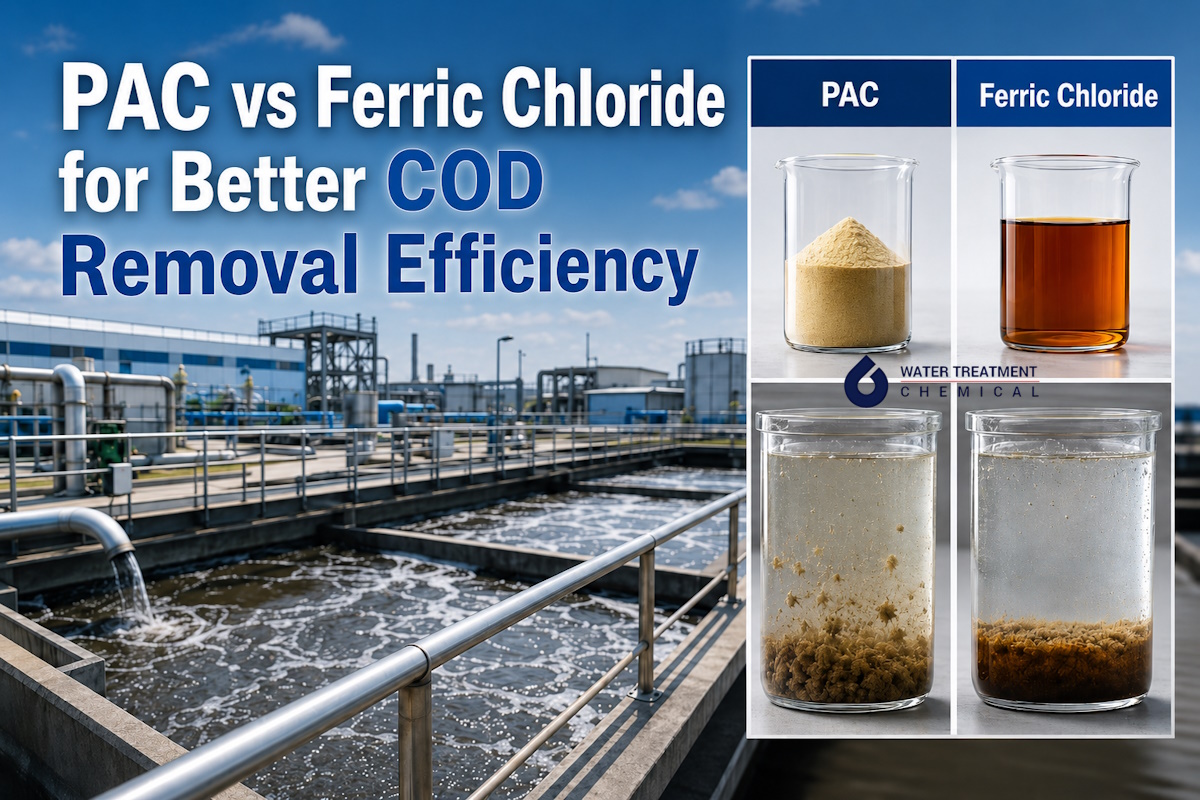
When assessing PAC vs. Ferric Chloride, several key factors influence COD removal efficiency. The type of industrial wastewater, the specific pollutants present, and the operational parameters of the treatment system all play crucial roles. A side-by-side comparison reveals the strengths and weaknesses of each coagulant.
Impact of Wastewater Composition
The composition of the wastewater significantly affects the performance of each coagulant. For wastewater with high concentrations of certain organic compounds, Ferric Chloride might provide a slightly better COD removal efficiency. However, in many cases, PAC offers a more consistent performance across a wider range of wastewater characteristics.
Operational Efficiency and Cost
Operational efficiency includes factors such as floc formation speed, settling time, and sludge production. PAC generally offers faster floc formation and reduced sludge volume, which can translate into lower operational costs. However, the initial cost per kg may be higher, which impacts the economics of treatment. Ferric Chloride, while often cheaper per kg, may incur higher sludge disposal costs.
Environmental Impact and Compliance
Both PAC and Ferric Chloride are effective at improving water quality, helping facilities meet discharge regulations. The environmental impact also includes factors beyond COD removal, such as the volume of sludge produced and the potential for corrosion. Selecting the right coagulant also helps ensure compliance with local pollution control norms.
Unsure whether PAC or ferric chloride is better for your ETP?
Selecting the Right Coagulant for Your Application
Choosing between PAC and Ferric Chloride requires a thorough understanding of your specific wastewater characteristics and treatment objectives. A comprehensive water analysis, including pH levels, COD values, and the presence of specific contaminants, is a crucial first step. Conducting jar tests to simulate the coagulation process with different chemicals and dosages provides valuable data for making an informed decision.
Conducting Jar Tests
Jar tests simulate the coagulation and flocculation process on a small scale. By varying the dosage of PAC and Ferric Chloride, you can observe floc formation, settling rates, and the resulting clarity of the treated water. This helps determine the optimal dosage for each chemical and predict the expected COD removal efficiency in your full-scale treatment system.
Long-Term Cost Analysis
Consider not just the initial chemical cost, but also the long-term operational costs. These include sludge disposal expenses, labor for operation and maintenance, and the potential impact on equipment lifespan. A comprehensive cost analysis will help you determine the most economical solution for your facility.
Conclusion
The selection of PAC or Ferric Chloride for COD removal efficiency is not a one-size-fits-all decision. Both chemicals offer unique advantages, and the optimal choice depends on a variety of factors. By understanding your wastewater characteristics, conducting thorough testing, and considering both operational and long-term costs, you can make an informed decision that ensures compliance, minimizes costs, and protects the environment.
Need PAC, flocculants, or wastewater treatment chemicals for your plant?