
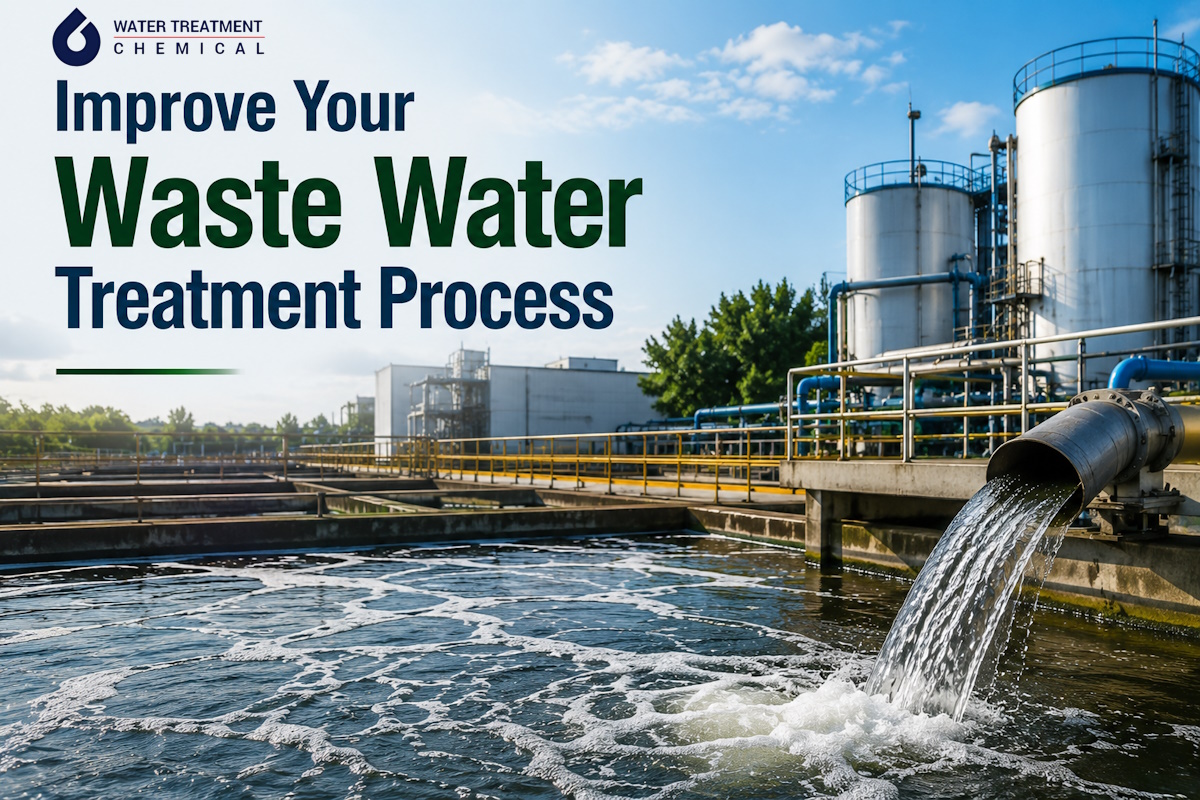
Managing a modern industrial manufacturing facility involves handling complex, highly variable waste streams. The efficiency of your waste water treatment process directly influences not only environmental compliance but also overall plant operating margins and productivity. When effluent parameters deviate from regulatory standards, facility managers often face the threat of legal penalties, process shutdowns, or severe environmental damage. Solving these performance bottlenecks requires a deep understanding of the chemistry, mechanics, and biological systems working in unison within your effluent treatment plant.
Many plants struggle with rising operational costs, excessive chemical consumption, and high volume sludge generation. These operational challenges often stem from a mismatch between the water chemistry and the chemical treatment program being used. By analyzing the underlying physical and chemical mechanisms of treatment, operators can transition from a reactive firefighting mode to a proactive, optimized approach. This comprehensive guide examines the most common operational failures in industrial wastewater treatment and presents actionable, chemically precise solutions to resolve them.
Need Help Optimizing Your Wastewater System?
Diagnosing System Failures in the Waste Water Treatment Process
Successfully troubleshooting treatment plant failures begins with isolating hydraulic, organic, and chemical variables. A failure in one stage of treatment cascades downstream, turning a simple organic spike into a massive solids discharge crisis. Operators must systematically monitor fluid dynamics, chemical injection accuracy, and environmental conditions to maintain stability in the waste water treatment process.
Understanding Hydraulic and Organic Overloads
Hydraulic overloads occur when the volume of wastewater entering the plant exceeds the designed capacity of the basins and clarifiers. This high flow velocity disrupts gravity settling, washing out biomass and suspended solids before they can separate from the liquid. Organic overloads occur when the concentration of dissolved pollutants spikes suddenly, exhausting the available oxygen and biological capacity of the system.
Managing Volatile COD and BOD Spikes
Production cycles, equipment washdowns, or raw material spills can release high-concentration organic streams into the effluent collection network. This leads to high COD in wastewater treatment reactors. When these sudden spikes reach the biological treatment stage, they create an immediate oxygen demand that existing aeration equipment cannot satisfy. Deprived of oxygen, aerobic bacteria perish, resulting in high turbidity, foul odors, and incomplete organic breakdown. To address high COD in wastewater treatment, plants must install equalization basins equipped with continuous mixing and pH correction. Equalization buffer systems store peak organic loads and release them gradually into the treatment train at a controlled rate, preventing biological shock.
Peak Flow Rate Challenges
During peak flow conditions, the hydraulic retention time in gravity clarifiers is drastically reduced. Particles that normally require two hours to settle are swept over the effluent weir in under an hour. To counteract this, plants can implement step feed configurations in their aeration basins to distribute the organic load, or utilize high molecular weight polymers to accelerate the settling velocity of suspended flocs.
Chemical Dosing Inaccuracies and Kinetic Failures
Chemical reactions in wastewater treatment depend heavily on stoichiometry, mixing energy, and reaction times. Under dosing chemicals leads to incomplete treatment, while over dosing wastefully increases operating costs and can actually restabilize colloidal particles, causing poor water clarity.
Impact of Out-of-Range pH on Coagulation
Inorganic coagulants like alum, polyaluminum chloride, and ferric chloride rely on specific pH ranges to form insoluable metal hydroxide precipitates. For example, alum operates most effectively within a pH range of 5.5 to 6.5, whereas polyaluminum chloride offers a slightly wider operational range. If the pH of the wastewater falls outside these optimum windows, the metal salts remain dissolved in the water as ions rather than forming the precipitate required for sweeping suspended solids. This results in poor clarifying performance, elevated dissolved metal levels in the effluent, and high chemical consumption. Ensuring automated pH control prior to chemical dosing is essential to maintain the kinetics of the clarification process.
Solving Coagulation and Flocculation Inefficiencies
Effective solid-liquid separation is the cornerstone of physical chemical wastewater treatment. Achieving rapid liquid clarification depends on optimizing the electrostatic and physical interactions between suspended solids and chemical additives.
The Dynamics of Coagulation and Flocculation in Water Treatment
Colloidal particles in wastewater carry negative surface charges that cause them to repel one another, remaining in suspension indefinitely. Understanding coagulation and flocculation in water treatment is vital for destabilizing these particles. Coagulation involves adding positively charged metal salts or cationic polymers to neutralize the negative surface charges, allowing the particles to come together. Flocculation is the subsequent step, where long-chain organic polymers are added to bridge these micro-flocs into larger, heavier macro-flocs that settle rapidly.
Selecting the Right Flocculants for Wastewater Treatment
Selecting the wrong polymer chemistry is one of the most common wastewater treatment problems. Using an anionic polymer when a cationic polymer is required, or selecting a polymer with insufficient molecular weight, will result in slow settling rates and cloudy clarifier effluents. It is critical to select targeted flocculants for wastewater treatment based on laboratory jar testing. Jar testing simulates the full scale treatment process, allowing chemists to evaluate the performance of different polymer charges and molecular weights under controlled conditions.
Role of Charge Density and Molecular Weight
The charge density of a polymer determines how strongly it will interact with neutralized particles, while the molecular weight determines the length of the polymer chain. High molecular weight polymers create long polymer bridges, which are ideal for capturing fine, suspended solids in mineral or heavy industrial sludges. However, if the shear force in the mixing chamber is too high, these long chains can break, reversing the flocculation process. Operators must calibrate mixing speeds to ensure adequate polymer dispersion without destroying the fragile floc structures.
Overcoming Poor Settling and Pin Flocs
Pin flocs are very small, fragile particles that do not coalesce into larger structures and fail to settle, escaping over the clarifier weirs. This phenomenon is often a symptom of over coagulation, where excessive coagulant has neutralized the particle charges but insufficient polymer is present to bind them together. It can also occur due to excessive mixing energy, which physically shears the delicate flocs. To resolve pin flocs, operators should reduce the primary coagulant dose slightly and introduce a low dose of high molecular weight anionic polymer to collect the micro-flocs into robust, fast-settling aggregates.
Troubleshooting Sludge Bulking and Rising Sludge
Sludge bulking and rising sludge are distinct problems that occur in secondary clarifiers. Sludge bulking is characterized by a slow settling sludge blanket that fails to compact, often caused by filamentous bacterial growth. Rising sludge, on the other hand, occurs when nitrogen gas bubbles attach to settled sludge, causing chunks of the sludge blanket to float to the surface. Rising sludge is caused by denitrification, where nitrates in the anaerobic zone of the clarifier are converted to nitrogen gas. To fix rising sludge, operators should increase the sludge return rate to prevent the sludge from remaining in the clarifier too long, and manage the aeration basin dissolved oxygen levels to control nitrification.
Not Sure Which Polymer Is Right for Your Plant?
Troubleshooting Biological Treatment and Nutrient Removal Issues
Biological treatment stages, such as activated sludge systems, sequencing batch reactors, and membrane bioreactors, rely on a sensitive consortium of microorganisms. Maintaining their metabolic health is critical for removing dissolved biodegradable compounds, nitrogen, and phosphorus.
Maintaining Biomass Health in Activated Sludge Systems
The health of your biomass is measured by parameters such as Mixed Liquor Suspended Solids (MLSS), Sludge Volume Index (SVI), and the Food-to-Microorganism (F/M) ratio. If the F/M ratio is too high, the bacteria are overloaded with food, leading to incomplete treatment, high organic carryover, and poor settling. If the F/M ratio is too low, the bacteria starve, causing the biological flocs to break down into pin flocs. Dissolved oxygen (DO) levels must be maintained between 1.5 and 2.0 mg/L. Insufficient oxygen limits bacterial respiration, while excessive oxygen wastes energy and can shear the biological flocs.
Combatting Filamentous Bulking and Foaming
Filamentous bacteria are a normal part of the activated sludge floc structure, providing strength and stability. However, under certain environmental conditions, such as low dissolved oxygen, low pH, or nutrient deficiencies, filamentous bacteria can outcompete floc-forming bacteria. These long, hair-like structures prevent the sludge from settling and compacting, leading to severe sludge bulking and thick, brown foam on the aeration tank surface. Chemical solutions include the targeted dosing of chlorine or hydrogen peroxide to the return activated sludge (RAS) stream to selectively kill the filamentous organisms on the exterior of the flocs. Additionally, dosing specialized macro-nutrients and micro-nutrients can correct the nutrient deficiencies that encourage filamentous growth.
Managing High COD and Suspended Solids
Industrial manufacturing processes often discharge non-biodegradable or inhibitory compounds that biological systems cannot readily break down. These compounds pass through the biological stage untouched, resulting in elevated effluent COD and suspended solids.
Addressing Recalcitrant Dissolved Organic Compounds
When biological systems encounter refractory or toxic organic compounds, the bacterial enzymes are unable to break the complex molecular bonds. This leaves high COD in wastewater treatment effluent. To resolve this, facilities can integrate advanced chemical pre-treatment technologies. Dosing advanced oxidizing agents, such as hydrogen peroxide, ozone, or Fenton’s reagent, can partially oxidize these complex molecules. This chemical pre-treatment breaks the stable carbon bonds, transforming the recalcitrant organics into simpler, biodegradable compounds that the downstream biological system can easily consume. Alternatively, utilizing powdered activated carbon in the aeration basin can physically adsorb these compounds, removing them from the liquid phase.
Optimization of Sludge Dewatering and Handling Processes
Sludge dewatering is the final step in reducing the physical volume of waste before transportation and disposal. Imbalances in polymer dosing or mechanical adjustments at this stage lead to wet sludge cakes and high disposal costs.
Selecting the Ideal Polymer for Maximum Cake Dryness
Sludge dewatering equipment, such as centrifuges, belt filter presses, screw presses, and rotary vacuum filters, place high physical shear forces on conditioned sludge. To achieve maximum cake dryness, the polymer used must create robust flocs that resist shearing and allow water to drain freely. Centrifuges require high molecular weight, high charge cationic polymers that can withstand the high centrifugal forces, while belt presses are more forgiving and require rapid water release polymers to prevent blinding of the filter belts.
Why Partnering with a Specialized Anionic Polymer Manufacturer Matters
In municipal and industrial applications where inorganic solids or mineral slurries dominate, anionic polymers play a crucial role in sludge conditioning. Partnering with a specialized Anionic Polymer Manufacturer allows you to access custom-formulated polymers with precise molecular weight distribution and charge density. A tailored anionic polymer aligns with the surface charge of the inorganic solids, facilitating rapid water release, clean filtrate, and high cake dryness. Standard, off-the-shelf polymers often fail to provide this level of precision, leading to high dosage requirements, wet sludge cakes, and frequent mechanical blinding.
Minimizing Sludge Volume and Disposal Costs
Optimizing your chemical conditioning program can reduce the volume of sludge produced by up to 30 percent. Drier sludge cakes mean less weight to transport, translating directly into reduced landfill fees and hauling costs. Additionally, proper polymer selection ensures a clean filtrate or centrate, which is returned to the headworks of the plant. A clean return stream reduces the solids load on the primary clarification system, improving overall plant efficiency.
Mitigating Mechanical and Operational Pitfalls
A well-formulated chemical program cannot succeed without functional mechanical infrastructure. Pipe scaling, pump wear, and improper mixing parameters directly compromise chemical performance.
Equipment Wear, Scaling, and Piping Clogs
Wastewater contains high concentrations of dissolved minerals, suspended solids, and organic compounds. Over time, these materials can precipitate out of solution, forming hard scale on pipe walls, heat exchangers, and dosing pump heads. This mineral scaling restricts flow, increases energy consumption, and damages dosing pumps. It is helpful to consider technologies used in boiler and cooling water chemicals, such as phosphonates and polymeric dispersants, and apply them to high-hardness wastewater streams. Dosing scale inhibitors prevents mineral crystallization, keeping critical lines and equipment clean.
Preventing Chemical Scaling in Dosing Lines
Localized pH shifts often occur at the point where chemicals are injected into the wastewater stream, causing rapid scale deposition at the tip of the dosing diffuser. For example, injecting alkaline chemicals into hard water causes immediate calcium carbonate precipitation, clogging the dosing nozzle. To prevent this, operators should install flushing ports to routinely clean dosing lines with dilute acid, or use dual-pipe configurations that facilitate chemical dilution before injection into the main stream.
Advanced Strategies for Industrial Wastewater Management
Modern industrial wastewater facilities must move beyond manual monitoring to maintain strict compliance under changing industrial loads. Effective wastewater management requires a proactive, data-driven approach that combines real-time monitoring, process optimization, and preventive maintenance. Establishing these systems helps facilities improve treatment efficiency, reduce operating costs, minimize compliance risks, and achieve long-term operational success.
Implementing Real-Time Monitoring and Diagnostic Audits
Relying solely on retrospective laboratory analysis can lead to delayed adjustments and potential compliance violations. Implementing real-time monitoring of key parameters, such as online pH, oxidation-reduction potential (ORP), turbidity, and dissolved oxygen, allows for automated chemical dosing adjustments. For instance, feedback loops can automatically adjust coagulant dosing based on real-time turbidity readings, or adjust biological aeration rates based on dissolved oxygen levels. Conducting routine diagnostic audits of your entire waste water treatment process helps identify physical bottlenecks, chemical inefficiencies, and opportunities for cost reduction.
Optimizing Your Waste Water Treatment Process for Long-Term Compliance
Maintaining a stable, efficient, and compliant wastewater treatment system requires a continuous balance of physical, chemical, and biological factors. Whether you are dealing with high COD, poor settling in your clarifiers, or inefficient sludge dewatering, the solution lies in systematic troubleshooting and precise chemical optimization. Rather than relying on trial-and-error chemical additions, partnering with an experienced chemical manufacturer ensures you receive the exact formulations and technical support required to address your unique wastewater challenges. By optimizing your chemical dosing strategies and upgrading your monitoring systems, you can secure long-term regulatory compliance, reduce operational waste, and lower your overall disposal costs.
Ready to Improve Treatment Efficiency and Reduce Costs?