
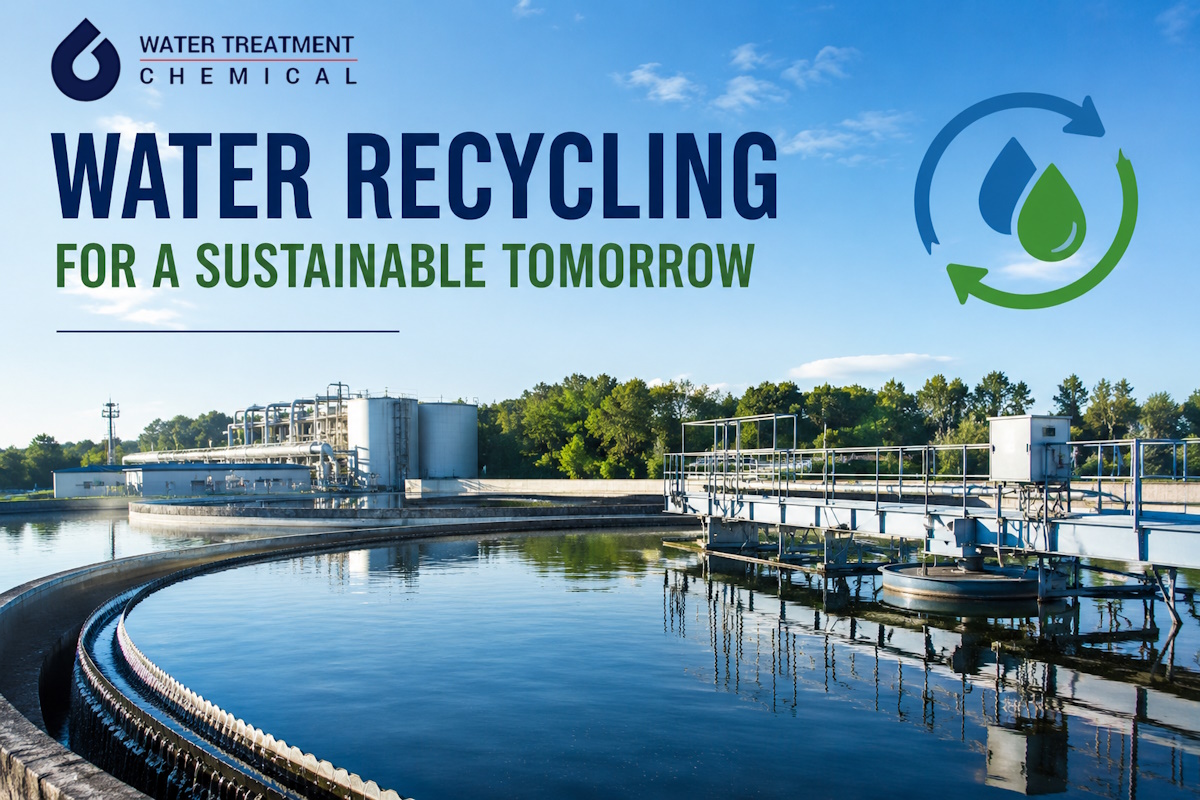
Water is one of the most valuable resources for communities, industries, agriculture, and ecosystems. However, increasing demand, rapid urbanization, industrial growth, and climate-related challenges have made water scarcity a serious global concern.
To address this issue, water recycling has become an important part of sustainable water management. It helps reduce dependence on freshwater sources, lowers wastewater discharge, and supports the responsible use of natural resources.
Water recycling is not just an environmental practice. For industries and municipalities, it is also a practical solution that can improve operational efficiency, reduce water-related costs, and support long-term sustainability goals. When combined with the right water treatment solutions, it can help improve water quality, reduce waste, and support long-term resource conservation.
Need guidance on choosing the right treatment approach for water recycling?
What Is Water Recycling?
Water recycling, also known as water reuse or water reclamation, is the process of treating wastewater so it can be reused for suitable purposes. The treated water may come from municipal wastewater, industrial effluent, process water, cooling tower blowdown, or other wastewater streams.
Depending on the level of treatment, recycled water can be used for:
- Agricultural irrigation
- Landscape irrigation
- Industrial processes
- Cooling tower makeup water
- Boiler feed preparation after proper treatment
- Construction activities
- Dust suppression
- Toilet flushing
- Groundwater recharge
- Wetland restoration
- Non-potable utility use
The quality required for recycled water depends on its intended application. Water used for irrigation, for example, does not require the same level of treatment as water intended for indirect potable reuse.
The Basics of Water Recycling
At its core, water recycling involves collecting used water, treating it to remove contaminants, and reusing it safely for beneficial purposes.
The process helps reduce pressure on freshwater sources such as rivers, lakes, reservoirs, and groundwater. It also helps reduce the amount of wastewater released into the environment.
Water recycling can be applied at different scales, including:
- Household graywater reuse
- Commercial water reuse systems
- Industrial wastewater recycling
- Municipal wastewater reclamation
- Agricultural reuse projects
- Groundwater recharge programs
By treating and reusing water, communities and industries can move from a “use and discharge” approach to a more circular and sustainable water management model.
Understanding Water Recycling Systems
A water recycling system usually includes several treatment stages. The exact process depends on the source of wastewater and the required quality of recycled water.
1. Preliminary Treatment
Preliminary treatment removes large particles, floating matter, grit, oil, grease, and coarse solids. This stage protects downstream equipment and prepares the water for further treatment.
2. Primary Treatment
Primary treatment removes suspended solids and settleable impurities. Coagulation and flocculation may be used to bring fine particles together, making them easier to separate from water.
3. Secondary Treatment
Secondary treatment usually involves biological processes that reduce organic matter, BOD, and COD. This stage is commonly used in municipal and industrial wastewater treatment plants.
4. Tertiary Treatment
Tertiary treatment improves water quality further through filtration, disinfection, activated carbon, chemical treatment, or nutrient removal. This stage is important when recycled water is intended for higher-quality reuse applications.
5. Advanced Treatment
Advanced treatment may include membrane filtration, reverse osmosis, ultraviolet disinfection, ozonation, or advanced oxidation. These technologies are often used when water must meet stricter reuse standards.
Common Types of Water Recycling
Water recycling can be classified based on the source of water and the intended reuse application.
Municipal Water Recycling
Municipal water recycling involves treating sewage or wastewater from homes, offices, and public facilities. The treated water can be reused for irrigation, landscaping, toilet flushing, industrial use, or groundwater recharge.
Industrial Water Recycling
Industrial water recycling focuses on treating and reusing wastewater generated from manufacturing and processing activities. In many facilities, industrial wastewater treatment plays an important role in reducing pollutants, improving water quality, and making treated water suitable for reuse.
Graywater Recycling
Graywater is wastewater from baths, sinks, laundry, and showers. After proper treatment, it can be reused for gardening, toilet flushing, or landscape irrigation. It does not include sewage from toilets.
Indirect Potable Reuse
Indirect potable reuse involves treating wastewater to a high standard and then adding it to groundwater basins, reservoirs, or surface water sources. The water later undergoes additional treatment before becoming part of the drinking water supply.
Direct Potable Reuse
Direct potable reuse involves treating wastewater through advanced processes and sending it directly into a drinking water treatment system or distribution system. This requires strict treatment, monitoring, and regulatory approval.
Role of Water Treatment Chemicals in Water Recycling
Water recycling depends not only on equipment and technology but also on effective chemical treatment. Water treatment chemicals help improve contaminant removal, support clarification, protect equipment, and maintain consistent water quality.
The selection of chemicals depends on wastewater characteristics, treatment goals, and reuse requirements.
Coagulants
Coagulants help destabilize suspended particles and colloidal impurities in wastewater. This makes it easier for particles to come together and settle. Poly Aluminium Chloride, alum, and other coagulants are commonly used in water and wastewater treatment.
For applications that require better turbidity reduction and clarification, understanding the role of polyaluminium chloride in water treatment can help improve the overall treatment process.
Flocculants
Flocculants help fine particles form larger flocs that can be removed through settling, flotation, or filtration. They are widely used in clarification, sludge thickening, and sludge dewatering.
In water recycling systems, flocculants for wastewater treatment can support better solid-liquid separation, reduce suspended solids, and improve the quality of treated water before reuse.
Not sure which chemicals are suitable for your water recycling system?
Decoloring Agents
Color removal is important in wastewater from textile, dyeing, ink, pigment, paper, and related industries. Decoloring agents help reduce color and improve the appearance and treatability of wastewater.
pH Control Chemicals
pH adjustment is often necessary to improve treatment efficiency, protect equipment, and meet reuse or discharge standards. Both acidic and alkaline chemicals may be used depending on the water condition.
RO Treatment Chemicals
Reverse osmosis systems are often used in advanced water recycling. RO treatment chemicals such as antiscalants, cleaners, and biocides help reduce scaling, fouling, and microbial growth on membranes.
Boiler Water Treatment Chemicals
When recycled water is considered for boiler feed preparation, it must be treated carefully. Boiler water treatment chemicals help control scale, corrosion, sludge, foaming, and dissolved oxygen-related issues.
Dispersants and Deflocculants
Dispersants and deflocculants help control suspended solids, reduce viscosity, and improve process efficiency in certain industrial applications. They are especially useful in sectors such as ceramics, minerals, clay processing, and related industries.
Benefits of Water Recycling
1. Conserves Freshwater Resources
Water recycling reduces the need to extract fresh water from rivers, lakes, reservoirs, and aquifers. This is especially important in regions facing drought, water stress, or seasonal shortages.
2. Reduces Wastewater Discharge
By treating and reusing wastewater, less effluent is released into the environment. This helps reduce pollution load on rivers, lakes, and coastal areas.
3. Supports Industrial Sustainability
Industries use large amounts of water for cooling, washing, rinsing, processing, and utility systems. Recycling treated water helps improve resource efficiency and supports sustainable manufacturing practices.
4. Lowers Long-Term Water Costs
Although water recycling systems require initial investment, they can reduce long-term costs related to freshwater purchase, wastewater disposal, and operational water dependency.
5. Helps Protect Ecosystems
Recycled water can be used to restore wetlands, support riparian habitats, and maintain green landscapes without putting additional pressure on freshwater sources.
6. Improves Water Security
Water recycling creates an additional water source. This is valuable for cities, industries, and agriculture in areas where water supply is limited or unreliable.
7. Reduces Pressure on Water Infrastructure
By reusing treated water locally, communities and industries can reduce demand on centralized water supply systems and delay the need for new infrastructure expansion.
Water Recycling in Industrial Applications
Industrial water recycling is one of the most practical ways to conserve water at scale. Many industries generate wastewater that can be treated and reused within the same facility.
Common industrial applications include:
- Cooling tower makeup water
- Boiler feed preparation after advanced treatment
- Equipment washing
- Floor cleaning
- Textile process water
- Dyeing and printing operations
- Paper and pulp processing
- Metal finishing and rinsing
- Mining and mineral processing
- Ceramic and clay processing
- Chemical manufacturing
- Construction and dust control
Before reuse, the treated water must be tested to ensure it meets the required parameters for the intended application. Important parameters may include pH, turbidity, TDS, hardness, COD, BOD, color, suspended solids, microbial quality, and specific contaminants.
Water Recycling in Action: Real-World Examples
Water recycling is already being used successfully in many parts of the world.
Municipalities use recycled water for landscaping, public parks, golf courses, road cleaning, and groundwater recharge. Agriculture uses treated wastewater for irrigation where regulations allow. Industries reuse treated process water for cooling, washing, rinsing, and utility operations.
In water-stressed regions, advanced water recycling systems are helping reduce dependence on freshwater sources. Some cities have also implemented indirect potable reuse projects where highly treated wastewater is returned to groundwater or surface water reservoirs before being used again as drinking water after further treatment.
These examples show that water recycling can be adapted to different needs, from small-scale reuse systems to large municipal and industrial projects.
Challenges in Water Recycling
Although water recycling offers many benefits, it also comes with challenges that must be managed carefully.
Public Acceptance
Some people are hesitant to use recycled water, especially when it is associated with wastewater. Public education, transparent monitoring, and clear communication can help build confidence.
Initial Setup Cost
Water recycling systems may require investment in treatment equipment, storage tanks, pipelines, monitoring systems, and maintenance. However, long-term savings and environmental benefits can outweigh the initial cost.
Variable Wastewater Quality
Wastewater quality can change depending on source, season, raw materials, production cycles, and chemical usage. This makes regular testing and process adjustment important.
Treatment Complexity
Different reuse applications require different treatment levels. A system designed for landscape irrigation may not be suitable for industrial reuse or potable applications without additional treatment.
Scaling, Fouling, and Sludge Management
Water recycling systems may face issues such as scaling, membrane fouling, biological growth, and sludge generation. Proper chemical treatment, equipment maintenance, and monitoring are essential.
Regulatory Requirements
Water reuse must comply with local environmental, health, and safety regulations. Standards vary depending on the region and the intended use of recycled water.
Innovative Strategies to Improve Water Recycling
To make water recycling more effective, treatment systems are becoming more advanced and efficient.
Some important strategies include:
- Using advanced filtration systems
- Improving coagulation and flocculation performance
- Applying membrane technologies such as ultrafiltration and reverse osmosis
- Using UV or ozone disinfection
- Optimizing chemical dosing through jar testing
- Monitoring water quality in real time
- Recovering water from process streams
- Reducing pollutant load at the source
- Improving sludge dewatering
- Reusing water within closed-loop systems
The success of a water recycling system depends on proper design, suitable treatment chemicals, regular testing, and consistent maintenance.
The Future of Water Recycling
As water scarcity continues to grow, water recycling will become an increasingly important part of sustainable development. Industries, municipalities, and communities will need to treat wastewater not only for safe discharge but also for reuse wherever possible.
Future water recycling systems are expected to become more efficient, automated, and cost-effective. Technologies such as smart monitoring, advanced membranes, energy-efficient treatment systems, and improved chemical formulations will support wider adoption.
The future of water management will depend on using every available source responsibly. Water recycling offers a practical path toward conservation, resilience, and long-term sustainability.
Rethinking Resource Management Beyond Water Recycling
Water recycling is one part of a larger approach to sustainable resource management. To protect water resources, it should be combined with water conservation, pollution prevention, rainwater harvesting, efficient industrial processes, and responsible wastewater treatment.
Instead of viewing wastewater as a waste product, it should be seen as a recoverable resource. With proper treatment, monitoring, and reuse planning, recycled water can help reduce environmental impact and support more sustainable growth.
Conclusion
Water recycling is a practical and sustainable solution for preserving freshwater resources. It helps reduce water scarcity, lower wastewater discharge, protect ecosystems, and support industrial and municipal water efficiency.
Whether used for irrigation, industrial operations, cooling systems, groundwater recharge, or non-potable applications, recycled water can play a major role in responsible water management.
As technology advances and awareness increases, water recycling will continue to become an essential part of building a more sustainable future.
Ready to improve your water treatment and recycling process?