
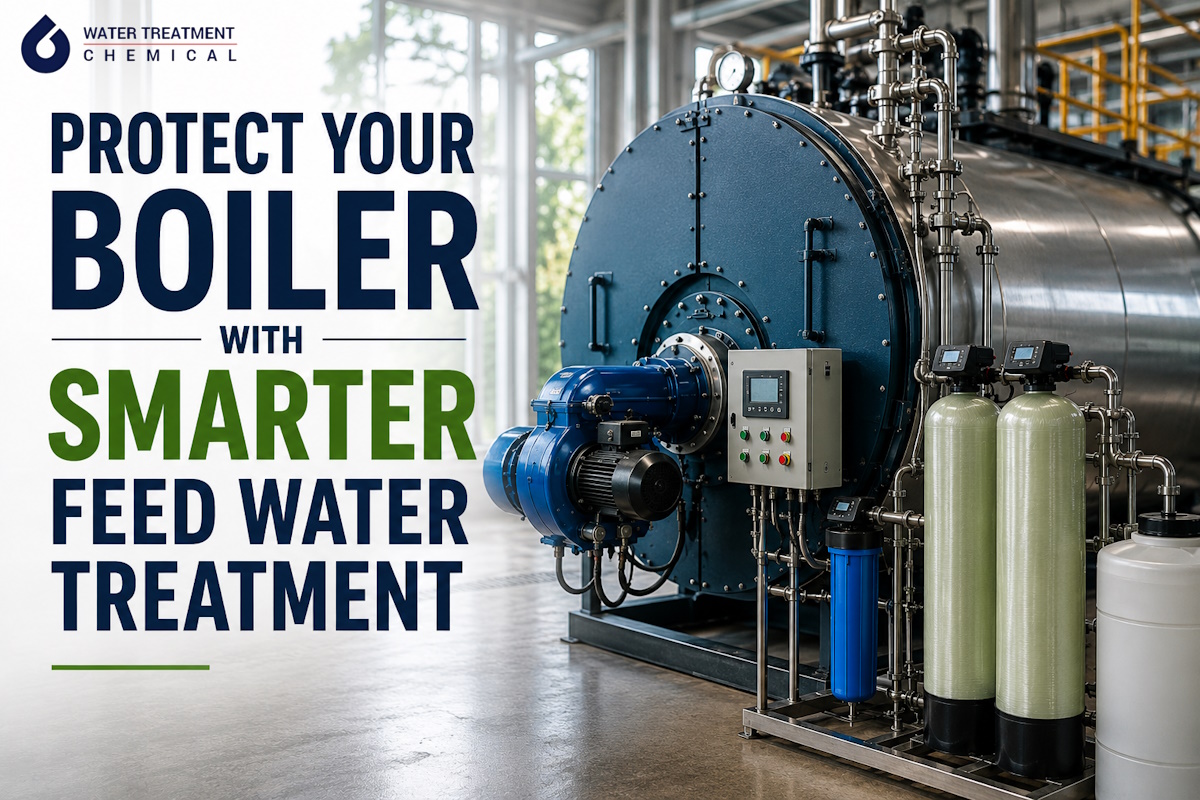
Industrial steam generation is the thermodynamic heartbeat of manufacturing plants, power facilities, and processing refineries. High-pressure boilers operate under extreme thermal stresses, where even micro-scale deviations in water quality can trigger catastrophic system failures. Without rigorous control, natural impurities in source water quickly turn steam systems into hotbeds for scale deposition, metal degradation, and steam contamination. This compromises safety and drastically increases fuel consumption.
Implementing a scientifically structured system for boiler feed water treatment is not merely a compliance task, it is a core operational necessity. This comprehensive guide details how to establish, monitor, and optimize water treatment processes to protect valuable mechanical assets, maximize thermal efficiency, and minimize hazardous emissions. By understanding the chemical principles governing water-metal interfaces, plant operators can transition from reactive troubleshooting to highly profitable predictive maintenance.
Need help evaluating your boiler feed water quality?
Understanding Key Contaminants in Boiler Feed Water
Raw water from municipal or groundwater sources contains a complex cocktail of dissolved gases, minerals, and organic matter. When subjected to the high temperatures and pressures of a boiler, these substances undergo chemical transformations that threaten the physical integrity of the entire system. Understanding these impurities is the first step toward selecting the right industrial boiler water treatment methods.
Hardness Ions (Calcium and Magnesium)
Calcium and magnesium are the primary constituents of water hardness. Under the influence of heat, dissolved calcium bicarbonate decomposes to form calcium carbonate, an insoluble compound that adheres aggressively to heat transfer surfaces. This crystalline structure acts as an unwanted thermal insulator, forcing the boiler to consume significantly more energy to generate the same volume of steam.
Dissolved Oxygen and Carbon Dioxide
Dissolved gases are highly destructive in steam systems. Oxygen dissolved in water promotes rapid, localized oxidative corrosion. Carbon dioxide, when dissolved, forms carbonic acid, which lowers the pH of the condensate return lines. This acidic environment aggressively dissolves copper and steel piping, leading to structural thinning and sudden line ruptures.
Silica Accumulation
Silica is a particularly challenging contaminant because it forms extremely hard, glassy deposits that are highly resistant to chemical cleaning. In high-pressure boilers, silica can volatilize and carry over directly with the steam. Once carried over, it deposits onto turbine blades, causing mechanical imbalances, erosion, and severe drop-offs in power generation efficiency.
Suspended Solids and Dissolved Salts
Total Dissolved Solids (TDS) and suspended particulate matter increase the electrical conductivity of boiler water and alter its surface tension. High concentrations of these solids promote foaming at the water-steam interface, leading to poor steam quality and water carryover into the distribution network. Managing these parameters requires high-performance water treatment solutions that combine filtration with precise blowdown management.
Identifying and Troubleshooting Major Boiler Water Failures
When the feed water chemistry is neglected, mechanical failures are inevitable. Operators must recognize the thermodynamic and chemical pathways of these failures to prevent costly emergency shutdowns and preserve capital equipment life.
Deposition and Scale Formation
Scale acts as a barrier to heat transfer. Because steel has a high thermal conductivity compared to calcium carbonate scale, even a thin layer of deposition can raise the tube metal temperature beyond its design limits. This causes localized overheating, plastic deformation, bulging, and eventual tube ruptures due to thermal stress.
The Thermal Resistance of Scale
A mere 1 millimeter of silicate-based scale can reduce boiler fuel efficiency by up to 10 percent. The localized insulation forces the burner to run longer and hotter, putting extreme mechanical stress on the combustion chamber and flue passes. Utilizing high-quality boiler water treatment chemicals is crucial to keeping these heat transfer zones perfectly clean.
Oxygen Pitting and Acidic Corrosion
Unlike uniform corrosion, oxygen pitting is highly localized. Dissolved oxygen attacks specific points on the metal surface, forming deep, conical pits that can rapidly penetrate thick steel walls. This electrochemical reaction is accelerated by high temperatures and low pH levels within the boiler drum.
Depolarization and Electrochemical Attacks
The presence of oxygen depolarizes the cathode in the electrochemical corrosion cell, allowing the anodic dissolution of iron to proceed unchecked. This process is highly self-catalyzing, meaning that once a pit forms, the chemistry inside the pit becomes increasingly acidic, accelerating the metal destruction rate.
Carryover, Foaming, and Priming
Carryover refers to any solid, liquid, or vaporous contaminant that leaves the boiler drum along with the generated steam. This is often caused by foaming, which occurs when high TDS or high organic content stabilizes the bubble films at the water surface, preventing the clean separation of steam and liquid.
Designing a Dual-Stage Treatment Strategy
An effective boiler feed water treatment regime cannot rely on a single chemical or process. It requires a dual-stage approach consisting of external pre-treatment to remove the bulk of impurities, followed by internal chemical treatment to manage the remaining trace contaminants inside the boiler drum.
External Pre-treatment Technologies
Before water ever reaches the boiler feed pump, it must undergo physical and chemical filtration to reduce hardness, alkalinity, and silica levels to manageable thresholds.
Softening and Dealkalization
Sodium zeolite softening is the most common pre-treatment for low to medium-pressure boilers. It works by exchanging hardness-causing calcium and magnesium ions with highly soluble sodium ions. Dealkalization processes further reduce bicarbonate alkalinity, minimizing the formation of corrosive carbon dioxide in the steam condensate lines.
Reverse Osmosis and Demineralization
For high-pressure utility boilers, simple softening is insufficient. These systems demand ultra-pure water produced via reverse osmosis and mixed-bed demineralizers. These systems physically block dissolved ions, silica, and organic molecules, ensuring the feed water conductivity remains exceptionally low. For optimal performance, these membrane systems must be maintained with dedicated reverse osmosis chemicals.
Thermal and Vacuum Deaeration
Mechanical deaeration is the primary defense against dissolved gases. By heating the feed water to its boiling point at a given pressure, the solubility of oxygen and carbon dioxide drops to near zero. A properly operating mechanical deaerator can reduce dissolved oxygen levels down to 7 parts per billion, leaving only trace amounts for internal chemicals to handle.
Internal Boiler Water Treatment Chemicals
Even the best pre-treatment systems occasionally slip or allow trace impurities to pass through. Internal chemical treatment acts as the final line of defense inside the boiler itself.
Phosphate Programs
Phosphate treatment programs are used to control pH and precipitate hardness ions into a soft, non-adherent sludge. By maintaining an alkaline environment, phosphate chemistries ensure that any residual calcium reacts to form hydroxyapatite rather than hard calcium carbonate scale, allowing it to be easily removed via routine blowdown.
Oxygen Scavengers
To eliminate the final traces of oxygen remaining after mechanical deaeration, chemical oxygen scavengers are dosed into the feed line. Traditional sodium sulfite is widely used in low-pressure systems, while volatile, metal-passivating scavengers like hydrazine or diethylhydroxylamine (DEHA) are preferred in high-pressure systems to prevent solid deposit buildup.
Polymer Dispersants and Sludge Conditioners
Modern synthetic polymers act as highly effective dispersants. They attach to suspended solids, giving them a strong negative electrical charge. This electrostatic repulsion keeps the mineral particles suspended in the boiler water, preventing them from agglomerating and baking onto the hot metal tubes.
Condensate Line Treatment
To combat the corrosive effects of carbonic acid in the return lines, operators feed volatile neutralizing or filming amines. Neutralizing amines chemically raise the pH of the condensate, while filming amines form a microscopic, hydrophobic barrier over the metal surfaces, physically shielding the steel pipes from corrosive moisture.
Not sure which boiler water treatment chemicals are right for your system?
Mastering Chemical Dosing in Water Treatment Systems
Simply purchasing high-quality chemicals is not enough, they must be administered with scientific precision. Inaccurate dosing can lead to under-treatment, resulting in rapid scaling, or over-treatment, which significantly inflates operational costs and risks foaming.
Feedback-Controlled Dosing versus Manual Adjustments
Manual, periodic chemical dosing is highly inefficient and creates volatile water chemistry cycles. Modern facilities utilize automated systems that adjust chemical feed rates based on real-time feedback from online conductivity meters, pH probes, and flow sensors. This continuous adjustment maintains chemical concentrations within a tight, optimal window.
Blowdown Management and Energy Conservation
Boiler blowdown is the process of discharging a portion of the highly concentrated boiler water to control TDS levels. While necessary, excessive blowdown wastes valuable thermal energy and chemical treatments. Implementing automatic, continuous blowdown systems regulated by conductivity controllers minimizes water loss while keeping TDS well below foaming thresholds.
Integrating Advanced Dosing Systems
To achieve maximum efficiency, plants must implement robust chemical dosing in water treatment setups. This includes highly accurate, positive-displacement diaphragm pumps, chemical tanks with integrated mixers, and digital control panels that communicate directly with the plant distributed control system.
Sector-Specific Boiler Water Requirements
Different industrial sectors operate under vastly different mechanical constraints and regulatory frameworks. What works for a small textile utility boiler will fail catastrophically in a high-pressure petrochemical power plant.
High-Pressure Power Boilers versus Low-Pressure Process Boilers
High-pressure utility boilers operating above 1000 PSI have zero tolerance for mineral deposits. These systems require high-purity demineralized feed water and volatile, zero-solids internal chemical treatment programs to prevent turbine contamination. Low-pressure boilers, on the other hand, can tolerate higher TDS levels but require aggressive phosphate and polymer dispersant programs to handle raw water hardness fluctuations.
Textile and Chemical Processing Plants
Textile mills and chemical plants often experience highly variable steam demands, leading to frequent load swings. This thermal cycling can cause physical scale to crack and spall off, clogging lines. These plants require resilient polymer dispersants that can handle rapid shifts in water concentration and temperature.
Food and Pharmaceutical Stringent Norms
In food processing and pharmaceutical manufacturing, steam may come into direct contact with the final product. Consequently, the chemical treatment programs must utilize FDA-approved, non-toxic ingredients. Traditional amines must be carefully regulated or replaced with certified culinary steam treatment alternatives to ensure complete consumer safety and regulatory compliance.
Selecting the Right Water Treatment Solutions
Choosing the correct supplier and chemical formulation requires a systematic evaluation of your feed water chemistry, operational parameters, and mechanical design. Making a decision based on chemical cost alone often leads to expensive failures downstream.
Key Parameters for Chemical Evaluation
When selecting chemical formulations, operators must demand comprehensive product data sheets detailing active ingredient concentrations, thermal stability profiles, and environmental toxicity ratings. High-performance chemicals should be highly stable at the boiler operating temperatures and compatible with existing metallurgy, including copper-alloy heat exchangers and stainless-steel components.
- Thermal Stability: Ensure that polymers and organic oxygen scavengers do not thermal-crack into corrosive byproducts at high pressures.
- Metallurgical Compatibility: Verify that amine mixtures do not cause corrosion in copper-based condenser tubes.
- Sludge Fluidity: Ensure that precipitated hardness solids remain highly fluid and do not consolidate into sticky mud.
- Environmental Discharge Compliance: Choose chemicals that meet local pollution control board norms for blowdown disposal.
Working with a trusted partner like our team ensures that you receive custom-formulated chemical blends designed specifically for your raw water matrix. Our approach focuses on reducing total cost of ownership by maximizing water reuse and minimizing chemical waste.
Developing a Resilient Utility Maintenance Strategy
Achieving reliable, high-efficiency steam generation requires a continuous commitment to water chemistry control. By combining high-performance pre-treatment equipment with advanced chemical formulations and automated dosing controls, industrial facilities can eliminate unplanned downtime, reduce fuel costs, and extend the lifespan of their boiler systems.
A successful program is built on regular testing, routine system inspections, and a strong partnership with water treatment experts who understand the unique dynamics of your specific industry. Investing in a scientifically designed water treatment program is the most cost-effective way to protect your plant utilities and secure long-term operational profitability.
Ready to improve boiler performance, reduce maintenance costs, and extend equipment life?