
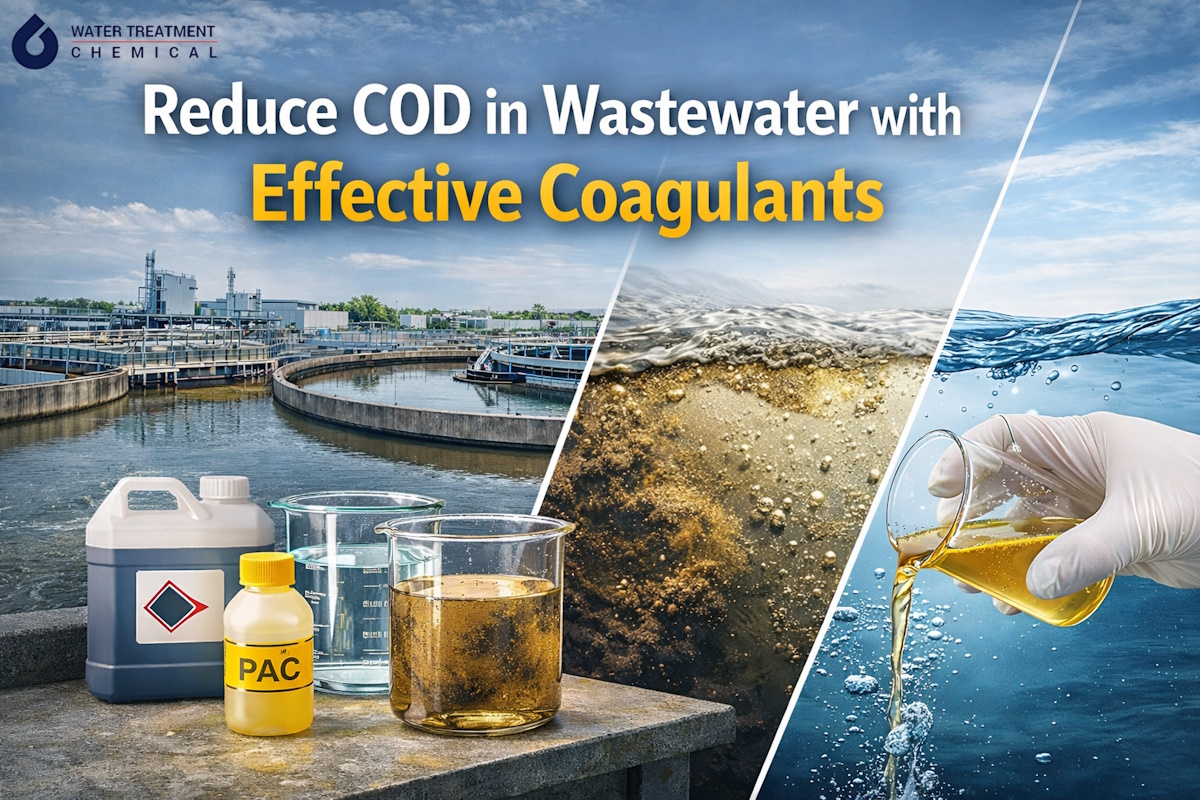
Introduction: The Challenge of High COD in Industrial Wastewater
High Chemical Oxygen Demand (COD) in industrial wastewater poses a significant challenge for facilities across India. Elevated COD levels indicate a high concentration of organic pollutants, leading to potential non-compliance with pollution control board regulations and environmental damage. Effective industrial wastewater treatment is crucial not only for regulatory adherence but also for protecting our water resources and ensuring sustainable operations.
This article provides a practical guide on how to reduce COD in wastewater, focusing on the use of coagulants. We’ll explore the science behind COD reduction, the best practices for choosing and applying coagulants, and how you can optimize your wastewater treatment process for both efficiency and cost-effectiveness. Understanding the principles of coagulation and its role in removing pollutants is key to achieving cleaner effluent.
Struggling with high COD levels in your plant?
Understanding COD and Its Impact on Wastewater Treatment
What is COD?
Chemical Oxygen Demand (COD) is a crucial water quality parameter that measures the amount of oxygen required to oxidize all organic compounds in a water sample chemically. It provides a measure of the pollution load and the potential for oxygen depletion in receiving water bodies. Higher COD levels generally mean a greater concentration of organic pollutants, such as oils, fats, greases, and various industrial chemicals.
Why Reducing COD Matters
Reducing COD in wastewater is essential for several reasons:
- Compliance: Regulatory bodies in India set strict limits on COD discharge to prevent environmental pollution. Failing to meet these standards can lead to penalties, operational restrictions, and reputational damage.
- Environmental Protection: High COD levels can deplete oxygen in rivers and lakes, harming aquatic life and disrupting ecosystems.
- Treatment Efficiency: High COD can overload treatment systems, reducing their efficiency and increasing operational costs.
Achieving these goals requires not only effective processes but also a focus on affordable industrial wastewater treatment, ensuring long-term compliance without significantly increasing operational expenses.
The Role of Coagulants in COD Reduction
How Coagulants Work
Coagulation is a critical step in many wastewater treatment processes. Coagulants are chemicals that neutralize the charges on suspended particles and destabilize them, causing them to clump together. This process, known as flocculation, creates larger particles (flocs) that can be more easily removed through sedimentation or filtration. Common coagulants used in industrial wastewater treatment include:
- Poly Aluminium Chloride (PAC): The use of PAC (Poly Aluminium Chloride) is widely recognized in wastewater treatment due to its effectiveness over a broad pH range. It is particularly effective in removing turbidity, color, and certain organic pollutants.
- Ferric Chloride: Ferric chloride is another effective inorganic coagulant, often used in wastewater treatment.
Choosing the Right Coagulant
Selecting the right coagulant depends on several factors, including the type and concentration of pollutants in your wastewater, the pH of the water, and the overall treatment goals. Pilot testing is crucial to determine the optimal coagulant type and dosage for your specific application. Consider the following when evaluating coagulants:
- Wastewater Composition: Analyze your wastewater to identify the specific pollutants present.
- pH Level: Different coagulants perform optimally within specific pH ranges.
- Cost-Effectiveness: Compare the cost of different coagulants and their effectiveness in reducing COD.
- Sludge Production: Consider the amount of sludge produced, as this impacts disposal costs.
By carefully evaluating these factors, you can choose a coagulant that is both effective and economical for your operations.
Not sure which coagulant is right for your wastewater?
Using PAC (Poly Aluminium Chloride) for COD Reduction
Advantages of PAC
Poly Aluminium Chloride (PAC) offers several advantages in ETP and STP applications:
- Effective over a Wide pH Range: PAC maintains effectiveness across a broad pH spectrum, making it versatile for various wastewater types.
- High Efficiency: PAC is known for its high efficiency in removing turbidity, color, and organic matter.
- Reduced Sludge Volume: In some cases, PAC can produce less sludge compared to other coagulants, reducing disposal costs.
Optimizing PAC Dosing
Proper dosing is crucial for maximizing PAC’s effectiveness. Key steps include:
- Jar Testing: Conduct jar tests to determine the optimal PAC dosage for your wastewater.
- Dosing Equipment: Use a reliable dosing system to ensure accurate and consistent chemical addition.
- Monitoring: Regularly monitor the effluent COD levels and adjust the dosage as needed.
By focusing on PAC dosage optimization, you can achieve the best possible results and ensure compliance.
Additional Strategies for COD Reduction
Flocculation
Flocculation is the process where destabilized particles come together to form larger, settleable flocs. Effective flocculation is essential for maximizing the removal of pollutants. The correct choice of flocculant and the optimization of mixing are key factors.
Filtration
Filtration removes remaining suspended solids after coagulation and flocculation. Filtration systems, such as sand filters or activated carbon filters, improve effluent clarity and further reduce COD levels.
Biological Treatment
Biological treatment methods, like activated sludge processes, can significantly reduce COD by using microorganisms to break down organic pollutants. Optimizing the biological process is crucial for effective COD removal.
Troubleshooting Common Problems
Ineffective Coagulation
If coagulation is ineffective, check the following:
- Incorrect Dosage: Adjust the coagulant dosage based on jar testing results.
- pH Imbalance: Ensure the pH is within the optimal range for the coagulant used.
- Insufficient Mixing: Improve mixing to ensure proper contact between the coagulant and pollutants.
High COD in Effluent
If effluent COD remains high:
- Check for Overloading: Ensure the treatment system isn’t overloaded with pollutants.
- Review System Parameters: Evaluate and optimize all stages of the treatment process.
- Consider Advanced Treatment: Explore advanced treatment methods like activated carbon or membrane filtration.
By systematically troubleshooting, you can identify and resolve issues, ensuring your system operates efficiently.
Conclusion
Reducing COD in wastewater is essential for compliance, environmental protection, and operational efficiency. By understanding the principles of coagulation, selecting the right coagulants like PAC, and optimizing your treatment processes, you can achieve significant reductions in COD levels. Regular monitoring, proper dosing, and proactive troubleshooting are crucial for maintaining a high-performing and cost-effective wastewater treatment system. Investing in effective industrial water treatment not only protects the environment but also safeguards your business from penalties and reputational damage.
Ready to improve COD removal efficiency and reduce treatment costs?